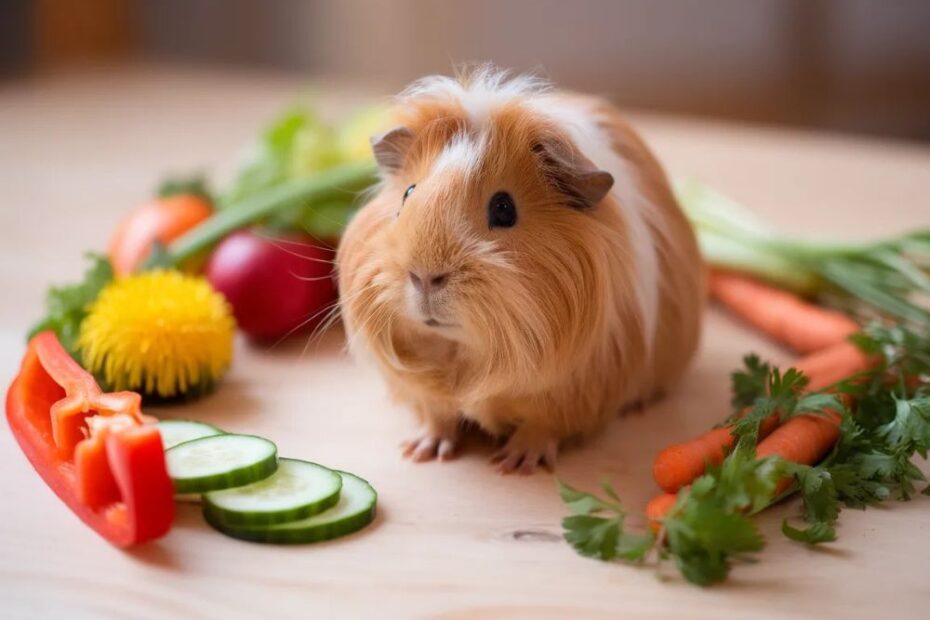
Fresh vegetables are one of the most important parts of a guinea pig’s diet. While hay should always be the foundation, vegetables provide the vitamin C, fibre, hydration and variety that guinea pigs need to stay healthy, active and happy. This complete A to Z guide covers every safe vegetable, how often to feed it and a few important ones to avoid.
Why Vegetables Matter So Much for Guinea Pigs
Guinea pigs share one important trait with humans: they cannot produce their own vitamin C. Unlike most other mammals, their bodies lack the enzyme needed to synthesize it internally. This means every drop of vitamin C they get must come from their diet and a deficiency leads to scurvy, a painful condition causing swollen joints, bleeding, tooth problems and in severe cases, death.
Vegetables (particularly leafy greens and bell peppers) are the most reliable, consistent source of vitamin C in a guinea pig’s daily diet. They also provide:
- Fibre for healthy gut function and digestion
- Hydration from the natural water content in fresh produce
- Minerals including calcium, potassium and magnesium
- Enrichment – variety in taste and texture keeps mealtimes stimulating
💡 Daily target: Aim for about 1 cup (80–100g) of fresh vegetables per guinea pig per day, split across a variety of types. Rotating what you offer throughout the week is better than feeding the same thing every day.
Understanding the Frequency Guide
Throughout this list, vegetables are marked with one of three feeding frequencies:
- ✅ Daily – Safe to include in the regular rotation every day
- 🔄 2-3 times per week – Nutritious but best limited due to calcium, sugar or gas risk
- ⚠️ Occasional / limit – Safe in small amounts but should be offered sparingly
A to Z Safe Vegetables for Guinea Pigs
A
Artichoke (Globe) 🔄 Safe in small amounts and a reasonable source of fibre and vitamin C. Remove the tough outer leaves and offer just the inner, tender part. Feed a couple of times a week rather than daily.
Asparagus 🔄 A nutritious option that’s low in sugar and contains useful vitamins and minerals. Reasonably low in pesticides. Cut into small pieces and offer a few times a week. It’s relatively high in oxalates so don’t feed daily.
Aubergine (Eggplant) – flesh only ⚠️ The ripe flesh is safe in very small amounts occasionally, but the leaves and stems contain solanine and must be removed completely. Many guinea pig owners skip this one entirely given how many better options exist, if in doubt, leave it out.
B
Basil ✅ An excellent herb that guinea pigs tend to love. High in vitamin C, low in fat and sugar. Safe to offer daily as part of a varied rotation. Both the leaves and stems are fine.
Beetroot (including leaves) 🔄 The red root is safe in small amounts but high in sugar, so limit to a couple of times a week. The green beetroot leaves are actually the better part (lower sugar, higher fibre) and can be fed more regularly. Note that beetroot will turn your guinea pig’s urine pink temporarily, which can be alarming if you’re not expecting it. Perfectly normal.
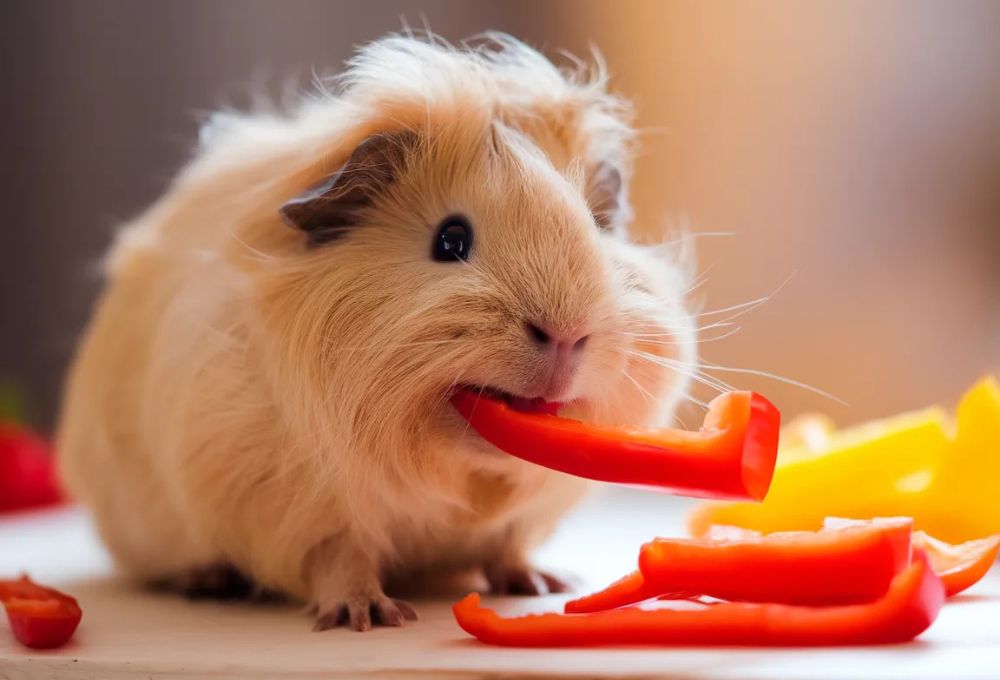
Bell Peppers (all colours) ✅ ⭐ The single best daily vegetable for guinea pigs. Bell peppers are extraordinarily rich in vitamin C — red peppers in particular contain more vitamin C per gram than almost any other common vegetable. All colors are safe: red, yellow, orange and green. Green peppers are slightly lower in vitamin C than the others. Offer a few strips or a quarter pepper per guinea pig daily. Remove the seeds and white pith.
Bok Choy (Pak Choi) ✅ A mild, leafy vegetable that’s safe daily and reasonably nutritious. Good for adding variety to the rotation. Rinse well before serving.
Broccoli (florets, leaves, stems) 🔄 High in vitamin C and very nutritious, but broccoli belongs to the cruciferous vegetable family which can cause gas and bloating in guinea pigs. The florets are the most likely to cause wind, the leaves and stems are actually better tolerated. Offer a couple of times a week in moderate amounts rather than daily. Start with a small piece to see how your guinea pig’s stomach handles it.
Brussels Sprouts ⚠️ Safe in very small amounts but a strong gas producer. Better to skip or offer only a tiny piece very occasionally. There are many better vegetable choices.
C
Cabbage (green, red, savoy) ⚠️ Can cause significant gas and bloating, the same issue as Brussels sprouts. Red cabbage is the best tolerated of the varieties, but all should be limited to very small amounts infrequently. Chinese cabbage (wombok) is gentler than regular cabbage.
Carrot (including tops) 🔄 One of the most popular guinea pig treats and genuinely enjoyed by most piggies. Carrots are safe but higher in sugar than leafy greens, so they’re best treated as a vegetable treat a few times a week rather than a daily staple. The carrot tops and leafy green stems are excellent, lower in sugar than the root, high in vitamin C and calcium, and many guinea pigs prefer them. A few strips of carrot root plus a good handful of tops is the ideal way to serve this.
Cauliflower (florets and leaves) ⚠️ Similar to broccoli, nutritious but gas producing. The leaves are better tolerated than the florets. Offer very sparingly.
Celery 🔄 Safe and hydrating, but the long stringy fibres can be a concern, always cut celery into small pieces (no longer than 1cm) to remove the long strings that could potentially wrap around teeth or cause issues. The leaves are fine too. A few pieces a couple of times a week is plenty.
Chicory ✅ A slightly bitter leaf that some guinea pigs love and others ignore. Safe daily and a reasonable source of vitamins. Good for rotation.
Coriander (Cilantro) ✅ A brilliant daily herb, very popular with most guinea pigs and a great source of vitamin C. Both the leaves and stems are safe. Grows easily in a pot at home if you want a constant fresh supply.
Courgette (Zucchini) ✅ Mild, well-tolerated and safe daily. Not the most nutrient dense option but a good way to add hydration and variety. Include the skin, it’s safe and adds a bit of texture.
Cucumber ✅ Another excellent daily vegetable. High in water content, mild in flavor and almost universally loved by guinea pigs. Leave the skin on, it contains more nutrients than the flesh. Don’t overfeed as the very high water content can cause loose stools if given in excess. A few slices daily is the right amount.
D
Dandelion Leaves and Flowers ✅ Often overlooked but genuinely one of the best things you can feed a guinea pig. Dandelion leaves are high in vitamin C, vitamin A, calcium and potassium. If you have dandelions growing in a garden that hasn’t been treated with pesticides or herbicides, you have a free, excellent food source. Both the leaves and the yellow flowers are safe. Avoid any from roadsides or areas where chemicals may have been used.
Dill ✅ A safe and nutritious herb that most guinea pigs enjoy. Good source of vitamin C and adds variety to the herb rotation. Both leaves and stems are fine.
E
Endive (Witloof/Belgian Endive) ✅ A slightly bitter leafy green that’s safe daily. Good source of vitamin C and fibre. A useful rotation vegetable, particularly in winter when other greens may be less available.
F
Fennel (bulb and fronds) 🔄 Both the bulb and the feathery fronds are safe for guinea pigs. Fennel has a mild anise flavor that some piggies enjoy. The fronds are a better daily option; the bulb is slightly higher in sugar so keep that to a few times a week.
G
Green Beans 🔄 Safe and a decent source of vitamin C and fibre. Offer raw (never cooked – cooking removes nutrients and changes the texture in ways that aren’t suitable). A few beans a couple of times a week is appropriate.
K
Kale 🔄 Very high in vitamin C and widely considered one of the most nutritious greens available. However, kale is also high in calcium and oxalic acid, which in excess can contribute to bladder or kidney stones, a painful and common condition in guinea pigs. This means kale is best rotated in a couple of times a week rather than fed daily. Curly kale, cavolo nero and other varieties are all safe at the same frequency.
Kohlrabi (bulb and leaves) 🔄 The leaves are more nutritious and lower in sugar than the bulb. Both are safe. The bulb has a crisp texture that many guinea pigs enjoy gnawing on. A few times a week is the right frequency.
L
Lettuce — Romaine / Cos ✅ An excellent daily lettuce, higher in vitamin C and nutrients than many other varieties, well tolerated and usually very popular. One of the best base greens for a guinea pig’s daily vegetable serving.
Lettuce — Red Leaf / Green Leaf ✅ Both are safe daily choices and nutritious options. Good variety to rotate with romaine.
Lettuce — Butterhead / Boston ✅ Milder and slightly softer than romaine. Safe daily.
Lettuce — Iceberg ❌ Avoid. Iceberg lettuce is almost entirely water with negligible nutritional value. The very high water content causes diarrhoea. Skip it entirely and use romaine or leaf lettuces instead.
M
Mint ✅ Safe and usually well-liked. Spearmint and peppermint are both fine in moderation. A few leaves as part of the daily herb rotation works well.
Mustard Greens ✅ A peppery leafy green that’s safe daily and a useful vitamin C source. Part of a good rotation alongside romaine and other leafy greens.
P
Parsley (flat-leaf and curly) 🔄 Parsley is extremely high in vitamin C (one of the best sources available) making it very valuable for guinea pigs. However, it’s also high in calcium, so it should be offered a few times a week rather than every single day, particularly for guinea pigs prone to bladder issues. A small sprig a few times a week is ideal.
Parsnip ⚠️ Safe in small amounts occasionally, but relatively high in sugar and starch compared to other vegetables. Not a regular rotation choice, the odd small piece as a treat is fine.
Peas (fresh, in pod) 🔄 Fresh peas and the pod are both safe. Guinea pigs often enjoy gnawing the pod open. Peas are higher in sugar than most vegetables so keep to a few times a week. Dried peas should be avoided, they’re too hard and a choking hazard.
Peppers – see Bell Peppers above ⭐
R
Radicchio 🔄 A slightly bitter red leaf that’s safe and adds good variety. Reasonable source of vitamin C. A few times a week works well.
Radish (including leaves) 🔄 The leaves are better than the radish root, less peppery and more nutritious. The root is safe but peppery and best in small amounts occasionally. The leaves can be fed a couple of times a week.
Rocket (Arugula) ✅ A peppery leaf that’s safe daily in moderate amounts. Good source of vitamin C and calcium. Part of a healthy daily rotation.
Romaine Lettuce – see Lettuce above ✅
S
Spinach 🔄 Nutritious and high in vitamin C, but also high in oxalic acid and calcium, the combination of which can contribute to bladder and kidney stones if fed frequently. Safe in small amounts a couple of times a week but should not be a daily staple. If your guinea pig has a history of bladder stones, reduce or eliminate spinach entirely.
Spring Greens ✅ Very nutritious, broadly similar to kale but slightly lower in calcium, making them a better daily option than kale for most guinea pigs. A brilliant base green.
Swiss Chard 🔄 Safe but high in oxalic acid, same caution as spinach. A few times a week maximum.
T
Tomato (ripe flesh only) ⚠️ Ripe red tomato flesh is safe in small amounts occasionally. However, tomatoes are acidic and can cause mouth sores if fed frequently. Always remove the leafy green top, stems and any unripe green parts completely – these contain tomatine, a toxic compound. A small piece of ripe flesh once or twice a week is the limit. Read the dedicated section in our [toxic foods guide] for more detail.
Turnip (including greens) 🔄 The greens are an excellent, nutritious choice and higher in vitamin C than the root. The root is safe but starchy, a couple of times a week for both.
W
Watercress 🔄 A nutritious peppery green, high in vitamin C. Safe a couple of times a week but has a strong flavor that not all guinea pigs enjoy. High in calcium so don’t feed daily.
Z
Zucchini – see Courgette above ✅
The Best Daily Vegetables – A Quick Guide
If you want a simple starting point, these are the safest, most nutritious vegetables to build your guinea pig’s daily rotation around:
| Vegetable | Why it’s great | Notes |
|---|---|---|
| Bell pepper (red/yellow) | Highest vitamin C of any common veg | Daily; remove seeds |
| Romaine lettuce | Nutritious, well-tolerated, popular | Daily staple |
| Cucumber | Hydrating, mild, universally loved | Daily; skin on |
| Coriander | High vitamin C, great flavour | Daily herb |
| Courgette | Mild, safe, good variety | Daily |
| Spring greens | Very nutritious, lower calcium than kale | Daily |
| Dandelion leaves | Outstanding nutrition, free from garden | Daily if pesticide-free |
| Basil | High vitamin C, low sugar | Daily herb |
Vegetables to Rotate (2-3 Times Per Week)
These are nutritious but come with caveats, too much calcium, oxalic acid, sugar or gas risk if fed daily:
- Broccoli (gas risk daily; leaves better than florets)
- Carrot (sugar in root; tops are better)
- Kale (high calcium and oxalic acid)
- Parsley (very high vitamin C but high calcium)
- Spinach (oxalic acid; bladder stone risk)
- Beetroot (sugar in root; leaves are fine more often)
- Green beans
- Fennel
- Peas (fresh)
Vegetables to Avoid Entirely
Some vegetables should never be fed to guinea pigs:
- ❌ Onions, garlic, leeks, chives – toxic to red blood cells
- ❌ Potatoes (raw) – contain solanine
- ❌ Rhubarb – extremely high oxalic acid; kidney failure risk
- ❌ Iceberg lettuce – no nutrition, causes diarrhoea
- ❌ Tomato leaves, stems, unripe tomatoes – contain tomatine
- ❌ Avocado – contains persin; can cause heart failure
For the complete guide to foods that are toxic or harmful, read our full post: What Can Guinea Pigs NOT Eat? Complete Toxic Foods List.

Tips for Serving Vegetables
Always wash first. Rinse all vegetables thoroughly before serving, even pre-washed bags. Pesticide residue is a particular concern with strawberries, spinach and leafy greens.
Serve at room temperature. Cold vegetables straight from the fridge can cause digestive upset. Take them out 20-30 minutes before serving or run briefly under lukewarm water.
Variety is everything. Rotate through different vegetables throughout the week rather than feeding the same two or three every day. Variety ensures nutritional balance and prevents boredom.
Remove uneaten vegetables after 2-4 hours. Fresh produce goes off quickly, especially in a warm cage. Uneaten food left too long can grow harmful bacteria. Check the cage after feeding and remove leftovers.
Introduce new vegetables slowly. When trying a new vegetable for the first time, offer just a small piece and wait 24 hours to check for any digestive reaction, soft or runny droppings are the main sign of intolerance. Introduce one new food at a time so you can identify any issues.
Organic when possible. Particularly for vegetables known to carry high pesticide loads like spinach, kale and strawberries. If buying conventional, wash especially thoroughly.
How Much Vegetable is Right?
A healthy adult guinea pig should have approximately 1 cup (80–100g) of fresh vegetables per day. This should be a mix of at least 3-4 different vegetables: a base leafy green, a vitamin C source like bell pepper and a couple of other rotating choices.
A simple daily template might look like:
- A few large leaves of romaine lettuce
- 2-3 strips of red bell pepper
- A few slices of cucumber
- A small handful of fresh herbs (coriander, basil, dill or mint)
This basic combination covers vitamin C, hydration, fibre and variety – and takes about 30 seconds to prepare.
Final Thoughts
The best diet for a guinea pig isn’t complicated, it’s just consistent. A generous supply of good hay, a varied daily cup of fresh vegetables anchored by bell peppers and leafy greens and a small amount of quality pellets will keep your guinea pig healthy, happy and thriving for years.
The A to Z list above might look overwhelming, but in practice you only need to remember about 6-8 safe daily vegetables and rotate them throughout the week. Start with the “best daily” list in the table above and expand from there as you get comfortable. 🐹🥬
Related posts:
- Can Guinea Pigs Eat Watermelon?
- Can Guinea Pigs Eat Strawberries?
- What Can Guinea Pigs NOT Eat? Complete Toxic Foods List
- What Hay Should Guinea Pigs Eat?
This guide is regularly reviewed to reflect current veterinary guidance. Always consult your vet if you have concerns about your guinea pig’s specific dietary needs.
