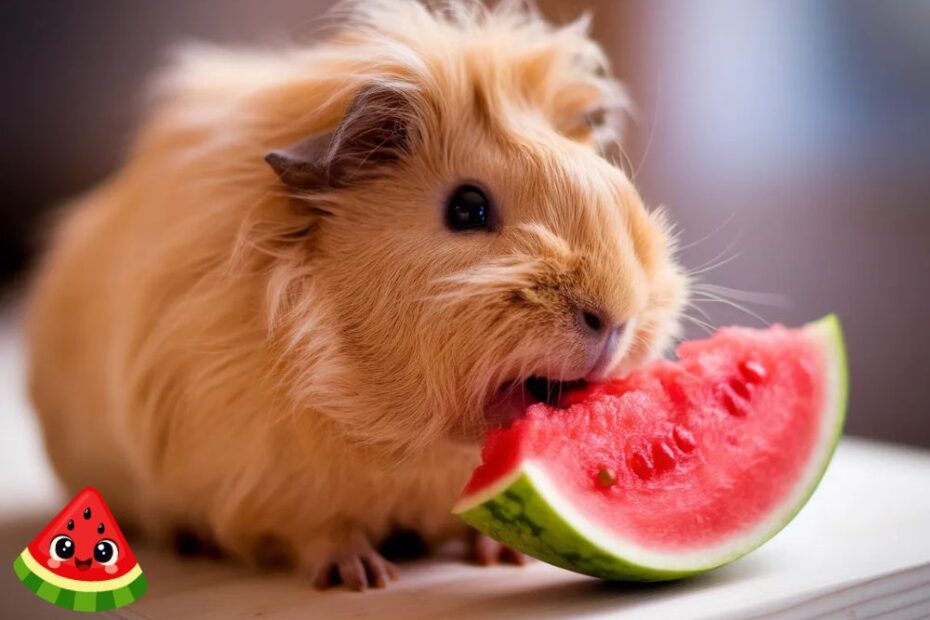
Yes, guinea pigs can eat watermelon, but there are a few important things to know before you slice one up for your piggy. The flesh is safe in small amounts, the rind is actually the healthier part and the seeds need to come out entirely. Read on for everything you need to know to feed watermelon safely.
Is Watermelon Safe for Guinea Pigs?
Watermelon is safe for guinea pigs as an occasional treat. It’s not toxic and most guinea pigs absolutely love it, the sweet, juicy flesh tends to go down very well with even the fussiest cavies.
That said, watermelon is high in sugar and water content, which means it should be offered in moderation rather than as a daily snack. Too much can cause digestive upset, loose stools, and over time, weight gain.
Think of watermelon the way you’d think of a biscuit for a child, perfectly fine as a treat, just not something you’d hand over every single day.
Nutritional Benefits of Watermelon for Guinea Pigs
Watermelon isn’t just a tasty treat, it does offer some genuine nutritional value:
Vitamin C – This is the big one. Guinea pigs cannot produce their own vitamin C (just like humans), so they rely entirely on their diet to get it. A deficiency can lead to scurvy, which is a serious and painful condition. Watermelon contains vitamin C, making it a useful (if minor) contribution to your guinea pig’s daily needs.
Vitamin A – Good for eye health, immune function and healthy skin and coat.
Hydration – Watermelon is about 92% water, making it a lovely way to help keep your guinea pig hydrated, especially during hot summer days.
Antioxidants – Watermelon contains lycopene and other antioxidants that support overall health.
Fibre – Particularly in the rind, which aids healthy digestion.
💡 Important: Watermelon should supplement, not replace, your guinea pig’s main sources of vitamin C. Fresh leafy greens like bell peppers, kale and parsley contain far more vitamin C and should be the foundation of their daily vegetable intake.
Can Guinea Pigs Eat Watermelon Rind?
Yes and the rind is actually the best part to offer your guinea pig.
This surprises a lot of people, but the rind (the pale green-to-white part just inside the outer skin) is lower in sugar than the red flesh, higher in fibre and still contains beneficial nutrients including vitamin C.
The white inner rind is perfectly safe and many guinea pigs enjoy it. You can leave a thin sliver of red flesh attached to make it more appealing.
The hard dark green outer skin is a different matter, this is very tough, difficult to chew and digest and is also where pesticide residue tends to concentrate. Always remove the outer skin before offering the rind to your piggy and give it a good wash first.
Summary: Rind vs Flesh
| Part of Watermelon | Safe? | Notes |
|---|---|---|
| Red flesh | ✅ Yes, in moderation | Higher sugar – limit to small pieces |
| White inner rind | ✅ Yes | Lower sugar, more fibre – the healthier choice |
| Hard green outer skin | ❌ Avoid | Tough to digest, may carry pesticides |
| Seeds | ❌ Remove | Choking hazard |
Can Guinea Pigs Eat Watermelon Seeds?
No, always remove the seeds before feeding watermelon to your guinea pig.
Watermelon seeds, both black and white are a choking hazard for guinea pigs. Their small throats and digestive systems are not designed to handle hard seeds safely. While seeds are not poisonous, they can become lodged in the throat or cause a digestive blockage, neither of which is a situation you want.
The easiest solution is to simply buy seedless watermelon. If you’re working with a seeded variety, take a moment to carefully pick out all the seeds from the flesh before serving. Also check any rind pieces, as seeds occasionally appear in the white part too.
How Much Watermelon Can Guinea Pigs Eat?
Keep portions small. A good guideline is:
- Red flesh: A 1-inch cube (roughly 1 teaspoon-sized piece) per guinea pig
- White rind: A 1–2 inch strip per guinea pig
- Frequency: Once or twice a week at most – not every day
This is enough for your guinea pig to enjoy the taste and get some nutritional benefit without the downsides of too much sugar or excess water intake.
If your guinea pig has never had watermelon before, start with a very small piece and watch for any signs of digestive upset (soft or runny droppings) over the next 24 hours. Some guinea pigs have more sensitive stomachs than others.
How to Prepare Watermelon for Your Guinea Pig
It takes about two minutes and makes all the difference:
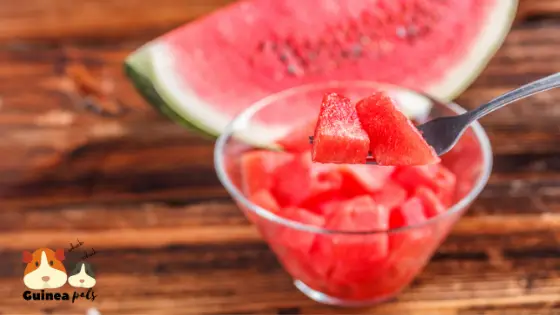
- Wash the watermelon: Rinse the whole fruit thoroughly before cutting, even if you’re not feeding the outer rind. Bacteria and pesticides on the skin can transfer to the flesh as you cut through it.
- Remove the outer green skin: Cut it away completely. Do not feed this part.
- Remove all seeds: Go through the flesh carefully and pick out every black seed. Check the rind too.
- Cut into small pieces: Bite-sized cubes or thin strips of rind are easiest for guinea pigs to manage.
- Serve fresh: Offer the watermelon at room temperature. Remove any uneaten pieces after an hour to prevent them going off in the cage.
That’s it, no cooking, no seasoning, no fuss. Just fresh, clean, appropriately sized pieces.
Signs You’ve Given Your Guinea Pig Too Much Watermelon
Watch for these after feeding watermelon, especially the first few times:
- Soft or watery droppings: The most common sign of too much sugar or water content
- Bloating or a rounded belly: Can indicate gas or digestive upset
- Lethargy: A guinea pig that seems unusually quiet after eating fruit may have had too much
- Loss of interest in hay: If your guinea pig fills up on sweet treats, they may eat less hay, which is the most important part of their diet
If you notice any of these, skip the watermelon for a week or two and make sure hay is freely available at all times.
Can Baby Guinea Pigs Eat Watermelon?
Baby guinea pigs over four weeks old can have a tiny amount of watermelon, but it’s best to wait until they are a little older and their digestive system is more established, around 8-12 weeks is a safer starting point.
When you do introduce it, start with just a small piece of the white rind (which is lower in sugar) rather than the red flesh. Introduce all new foods slowly and one at a time so you can identify anything that doesn’t agree with them.
What About Watermelon Leaves and Plants?
Very little research exists on the safety of watermelon leaves or other parts of the watermelon plant for guinea pigs. Because of this uncertainty, it’s best to avoid them entirely. There are so many safe, well-researched greens to choose from, stick with those rather than taking an unnecessary risk.
Other Safe Fruits for Guinea Pigs
If your guinea pig loves watermelon, they may also enjoy these fruits (all in small amounts, a couple of times a week):
- Strawberries – A great source of vitamin C
- Blueberries – Antioxidant-rich and usually a big hit
- Melon – Cantaloupe and honeydew are safe, same rules apply as watermelon
- Apple – Remove seeds and core first
- Pear – Remove seeds; a good occasional treat
- Mango – Remove the skin and stone; high in vitamin C
Always remove seeds, pips and stones from any fruit before serving. And remember: fruit is a treat, not a staple. Bell peppers, leafy greens and good quality hay should make up the bulk of your guinea pig’s diet.
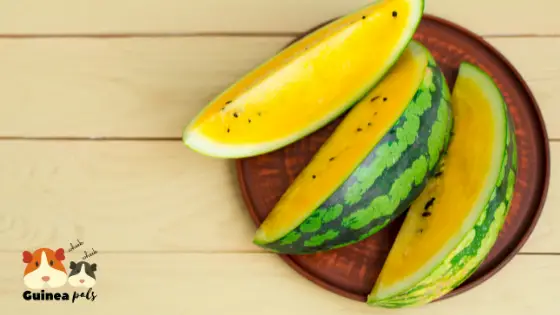
Can Guinea Pigs Eat Yellow Watermelon?
Yes, guinea pigs can eat yellow watermelon and the same rules apply as with regular red watermelon. The main difference is that yellow watermelon tends to be even sweeter than the red variety, so it’s worth being a little more conservative with portions. Stick to one small cube per week rather than two and always remove the seeds.
Can a guinea pig drink watermelon juice?
You should not offer watermelon or any juice to a guinea pig. Juices are too high in sugar, which is not good for your piggy. Too much sugar can cause diarrhea, obesity and other health problems.
Quick Answer Summary
- ✅ Can guinea pigs eat watermelon? Yes, in small amounts, once or twice a week
- ✅ Can guinea pigs eat watermelon rind? Yes, it’s actually the healthier option; remove the hard outer skin first
- ❌ Can guinea pigs eat watermelon seeds? No, always remove all seeds; they are a choking hazard
- ❌ Can guinea pigs eat the green outer skin? No, too tough to digest, may carry pesticides
- 🍉 Serving size: 1-inch cube of flesh or a 1–2 inch strip of rind per piggy
- 📅 Frequency: Once or twice a week maximum
Final Thoughts
Watermelon makes a wonderfully refreshing treat for guinea pigs, especially in warmer months. Most piggies go absolutely crazy for it and watching them nibble on a little piece with juice on their noses is honestly one of the joys of being a guinea pig owner.
Just remember: wash it, remove the seeds, ditch the tough outer skin and keep portions small. Do that and your guinea pig can enjoy watermelon safely as part of a happy, balanced diet.
Do your guinea pigs prefer the red flesh or the rind? 🐹🍉
Always introduce new foods gradually and consult your vet if you have concerns about your guinea pig’s diet or health.
)