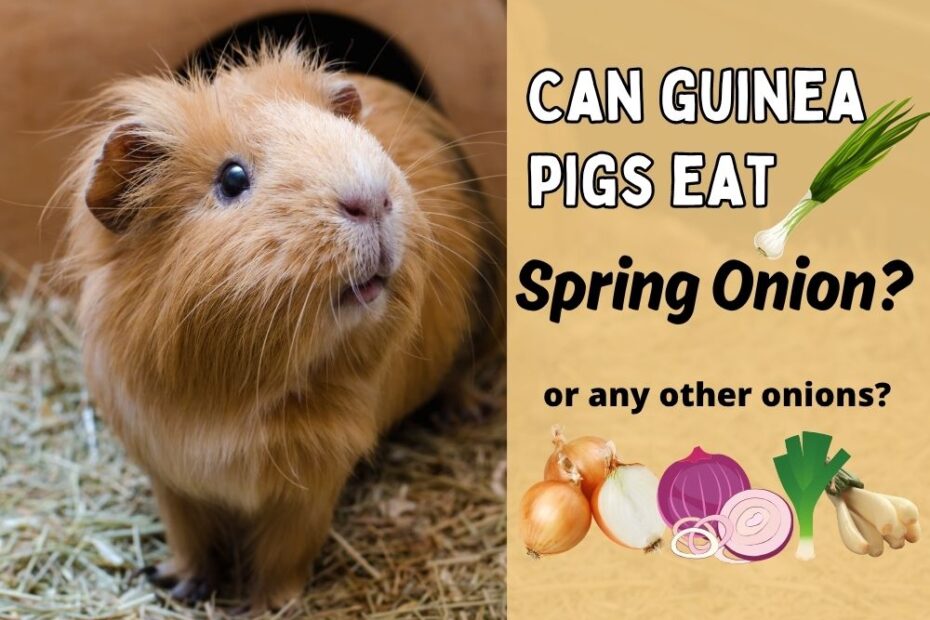
No, guinea pigs should not eat spring onions. Spring onions belong to the Allium plant family, which contains toxic compounds that damage red blood cells in guinea pigs. Even small amounts can cause serious health problems and the white bulb in particular should never be offered under any circumstances. This guide covers spring onions and every other member of the onion family, what happens if your guinea pig accidentally eats one and what to feed them instead.
What Are Spring Onions? (And Why the Name Confusion?)
Before diving into the safety question, it helps to clear up the naming – because spring onions, scallions and green onions are terms that cause a lot of confusion and different countries use them differently.
- Spring onions – a young onion harvested before the bulb fully develops; common term in the UK, Australia and South Africa
- Scallions – the common term in the US and Canada; typically refers to an even younger onion with a very small or undeveloped bulb
- Green onions – a broad term used interchangeably with both of the above in many countries
For the purposes of guinea pig safety, the name doesn’t matter. Whether the label says spring onion, scallion or green onion – it’s all the same plant family and the same toxic risk applies.
Why Are Spring Onions Toxic to Guinea Pigs?
Spring onions (along with all other members of the Allium plant family) contain naturally occurring compounds called organosulfoxides. When a guinea pig chews and digests these plants, the organosulfoxides break down into reactive sulfur compounds including N-propyl disulfide and thiosulphates.
These compounds enter the bloodstream and attack red blood cells directly. They oxidise a component of haemoglobin (the protein inside red blood cells that carries oxygen) causing the cells to break down prematurely. This condition is called haemolytic anaemia: a potentially life-threatening reduction in healthy red blood cells.
With fewer functioning red blood cells, the body struggles to transport oxygen to vital organs. In severe cases, this leads to organ failure.
🚨 Critical point: Guinea pigs cannot vomit. Unlike cats or dogs that may expel a toxic substance, whatever a guinea pig eats must pass entirely through their digestive system. This makes prevention absolutely essential – there is no quick fix once something toxic has been swallowed.
What About the Green Leafy Tops?
This is where you’ll find conflicting advice online, some sources suggest the green leafy tops of spring onions are safe in small amounts. This is a nuanced area that’s worth addressing clearly.
The green tops of spring onions do contain lower concentrations of the toxic organosulfoxide compounds compared to the white bulb. Some guinea pig owners have fed small amounts of the leafy tops without an immediately visible reaction.
However, my position is to avoid all parts of the spring onion entirely – including the tops. Here’s why:
- The green tops still contain organosulfoxides, just in lower concentrations – “lower” doesn’t mean “safe”
- Guinea pigs are small animals; a quantity that might cause only mild effects in a larger animal can be much more significant in a 1kg cavy
- The risk-to-benefit ratio makes no sense – there are dozens of safe, nutritious leafy greens available that offer the same or better nutrition with zero risk
- If your guinea pig has secretly eaten more than you intended, or if they have an underlying health condition, the margin for error is very small
When you can feed romaine lettuce, fresh coriander, rocket or bell pepper – all of which are nutritious and completely safe – there is simply no good reason to take any risk with spring onion tops.
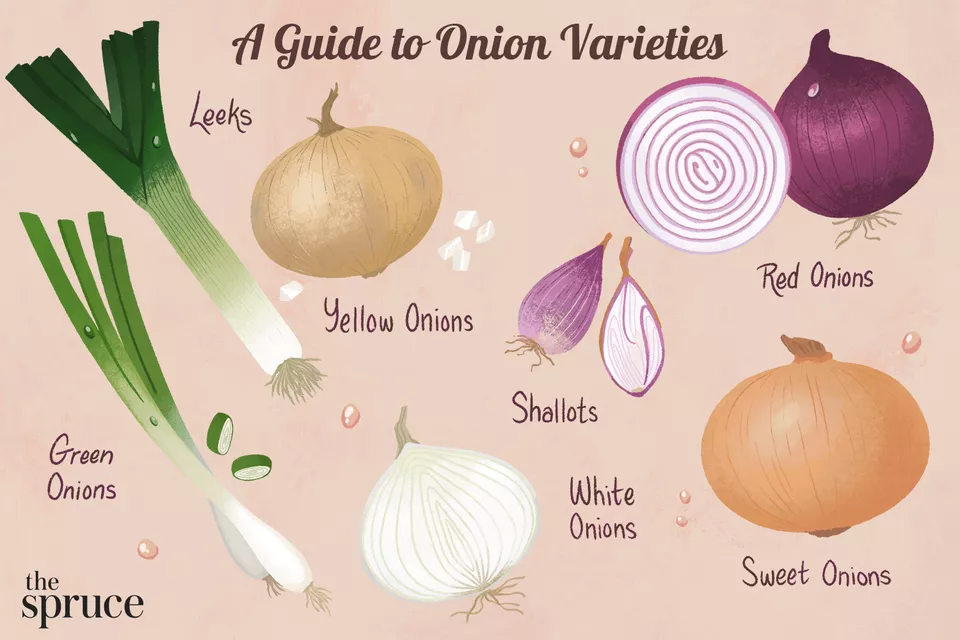
The Whole Allium Family – All Toxic to Guinea Pigs
Spring onions are just one member of a large plant family. Every single Allium species contains the same toxic compounds and should be kept well away from guinea pigs:
Onions (white, yellow, sweet)
The most commonly available and one of the most dangerous. Onion consumption should be considered a medical emergency that requires immediate veterinary care. The toxic compounds in onions are present whether they’re raw, cooked, dried or powdered. Never feed onion in any form and be mindful that many processed human foods contain onion powder as a flavoring.
Red Onions
Equally toxic as white or yellow onions. The red color comes from different pigments but the dangerous organosulfoxide compounds are identical. No form of red onion is safe.
Garlic
Highly toxic, arguably even more potent than regular onions in terms of its organosulfoxide concentration per gram. Garlic in any form: fresh, dried, powdered or as an extract – must never be given to guinea pigs. Keep garlic bread, hummus and any garlicky foods completely out of reach.
Leeks
Leeks are a close relative of onions and contain the same toxic compounds. These compounds are released whenever the plant is broken down, as they’re chewed or as the digestive system breaks them down and once released, they’re absorbed into the bloodstream where they can destroy red blood cells. Leeks should never be fed to guinea pigs.
Shallots
Shallots are a small, sweet variety of onion, but the sweetness doesn’t reduce the toxicity. The same compounds are present in the same concentrations. Never feed shallots to guinea pigs in any amount.
Chives
Chives are a herb version of the Allium family, commonly used as a garnish or herb in cooking. They look harmless – thin, green and leafy – but they are toxic to guinea pigs for exactly the same reason as onions. Keep them out of the cage and away from floor time areas where fresh herbs might be dropped.
Wild Garlic (Ramsons)
This one catches many outdoor guinea pig owners by surprise. Wild garlic grows commonly in gardens, hedgerows and woodland areas across the UK and Europe, particularly in spring. It has broad green leaves that can resemble safe plants like lily of the valley. If your guinea pig has outdoor time, check the area carefully – wild garlic is toxic and should be removed from any area where your piggies graze.
Onion Grass / Wild Onion
Another garden hazard. Onion grass looks like ordinary grass but has a distinctive onion smell when crushed. It grows as a weed in many lawns. Before letting your guinea pig graze outdoors, always check for and remove any onion grass from the area.
Symptoms of Onion or Allium Toxicity in Guinea Pigs
Know what to look for if you suspect your guinea pig has eaten any part of the onion family:
Early symptoms (within hours):
- Lethargy and unusual tiredness
- Loss of appetite
- Drooling or excessive salivation
- Watery eyes or nasal discharge
- Labored or rapid breathing
- Weakness, particularly in the hind legs
More serious symptoms (as haemolytic anaemia develops):
- Pale gums and lips (a sign of reduced red blood cell count)
- Rapid heart rate
- Extreme weakness or collapse
- Difficulty moving or standing
- Yellowing of the skin or eyes (jaundice – a sign of red blood cell breakdown)
🚨 If your guinea pig has eaten any part of an onion, leek, garlic, chive or spring onion and is showing ANY of these symptoms – contact your vet immediately. Do not wait to see if they improve on their own. Haemolytic anaemia can progress quickly and is genuinely life-threatening.
What to Do If Your Guinea Pig Eats a Spring Onion
Stay calm but act quickly:
- Identify how much was eaten – a tiny nibble versus a significant amount makes a difference to how urgently you need to act
- Check which part was eaten – the white bulb is more immediately dangerous than the green tops, but both warrant attention
- Watch for symptoms – lethargy, breathing changes, pale gums and weakness are the key warning signs
- Call your vet – even if your guinea pig seems fine, a call to your vet to describe what happened is the right move. They can advise whether an in-person check is needed
- Do not try to induce vomiting – guinea pigs cannot vomit; attempting this causes additional harm
- Bring information to the vet – if you go in, bring the packaging or a sample of what was eaten so they can assess the toxin load accurately
Even if your guinea pig shows no immediate symptoms, some of the damage from Allium toxicity builds up over time. A vet check is always worthwhile.
Hidden Sources of Onion to Watch Out For
It’s not just fresh spring onions you need to be aware of. Onion compounds are present in many foods that might accidentally end up near your guinea pig:
- Onion powder – found in many crisps, crackers, stock cubes, sauces and processed foods. Far more concentrated than fresh onion per gram
- Garlic bread or garlic butter – highly dangerous; never share with your guinea pig
- Pre-made salads – if you’re prepping a salad with spring onions or chives and your guinea pig is nearby, don’t let them nibble from the bowl
- Baby food – some vegetable baby food pouches contain onion or garlic as a flavoring; never use these as guinea pig treats
- Ready meals and sauces – almost always contain onion in some form
The safest rule: only feed your guinea pig foods you have specifically prepared for them from fresh, identifiable ingredients.
Safe Alternatives to Spring Onions
If you’re looking for safe leafy green options to replace spring onions in your guinea pig’s diet, you have plenty of excellent choices:
For a similar fresh, green experience:
- Fresh coriander – high in vitamin C, usually very popular, completely safe daily
- Flat-leaf parsley – exceptional vitamin C content; offer a few times a week due to calcium
- Basil – a firm guinea pig favorite, safe daily
- Dill – mild and nutritious; most guinea pigs enjoy it
- Fresh mint – a few leaves as part of the daily herb rotation
For leafy bulk:
- Romaine lettuce – the ideal daily base green; nutritious and well-tolerated
- Rocket (arugula) – peppery, nutritious, safe daily
- Spring greens – highly nutritious and safe daily; a brilliant kale alternative
- Cos lettuce – another excellent daily choice
For vitamin C specifically:
- Red bell pepper – the gold standard; more vitamin C per gram than almost any other vegetable, low in calcium and universally loved by guinea pigs
- Strawberries – an occasional fruit treat packed with vitamin C
- Kale – very high in vitamin C; best offered a few times a week rather than daily due to calcium
For the complete guide to safe vegetables and how often to feed them, visit our Best Vegetables for Guinea Pigs — A to Z Safe Food List.
Quick Reference: The Onion Family Safety Guide
| Allium plant | Safe for guinea pigs? | Notes |
|---|---|---|
| White / yellow onion | ❌ Never | Highly toxic in all forms |
| Red onion | ❌ Never | Same toxicity as regular onion |
| Spring onion / scallion (bulb) | ❌ Never | Toxic; never feed |
| Spring onion / scallion (green tops) | ❌ Avoid | Lower risk but not worth it; skip entirely |
| Garlic | ❌ Never | Very high organosulfoxide concentration |
| Leeks | ❌ Never | Same toxic compounds as onions |
| Shallots | ❌ Never | Small onion variety; equally toxic |
| Chives | ❌ Never | Herb form of Allium; toxic |
| Wild garlic | ❌ Never | Common garden weed; keep piggies away |
| Onion grass | ❌ Never | Check lawns before outdoor grazing |
| Onion powder | ❌ Never | More concentrated than fresh onion |
Final Thoughts
Spring onions might look harmless – they’re small, green and easy to mistake for a safe leafy herb. But every member of the Allium family, from the largest white onion to the most slender scallion, contains compounds that are genuinely dangerous to guinea pigs.
The good news is that the safe food list for guinea pigs is long, varied and full of options your piggies will love just as much – if not more. Stick to the safe list, keep the Allium family firmly off the menu and your guinea pig will thrive.
When in doubt about any food, the safest approach is always to leave it out and check first. A quick search (or a question to your vet) takes far less time than an emergency appointment. 🐹
Related posts:
- What Can Guinea Pigs NOT Eat? Complete Toxic Foods List
- Best Vegetables for Guinea Pigs – A to Z Safe Food List
- Can Guinea Pigs Eat Bell Peppers?
- Can Guinea Pigs Eat Strawberries?
This post is regularly reviewed to reflect current veterinary guidance. If your guinea pig has eaten something toxic, always contact your vet immediately rather than relying on online advice.
)