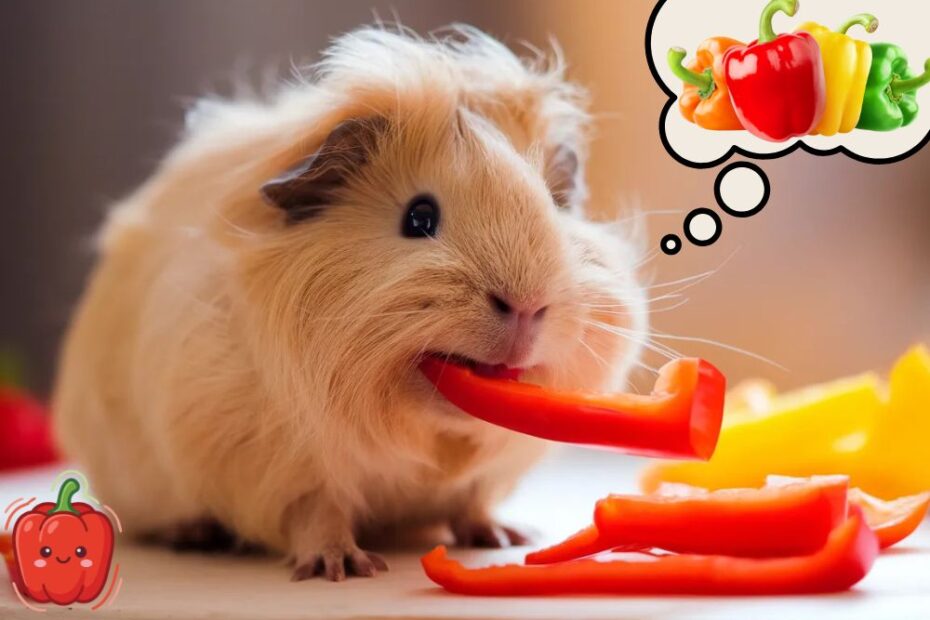
Yes, bell peppers are not just safe for guinea pigs, they’re one of the single best vegetables you can feed them. They’re packed with vitamin C, low in calories, well-tolerated by most guinea pigs and available year round. If you only added one vegetable to your guinea pig’s daily diet, bell pepper would be the one to choose. Here’s everything you need to know about feeding them safely.
Why Bell Peppers Are So Good for Guinea Pigs
Bell peppers are nutritional powerhouses for guinea pigs and the vitamin C story is genuinely remarkable:
Bell peppers contain more vitamin C per 100g than oranges, strawberries or broccoli. Red bell peppers in particular are one of the richest natural sources of vitamin C of any common vegetable. This matters enormously for guinea pigs because, just like humans, they cannot produce their own vitamin C. Every milligram must come from their diet. A deficiency leads to scurvy, a painful condition causing swollen, painful joints, bleeding, dental problems, a rough coat and in severe untreated cases, death.
Making bell pepper a regular part of your guinea pig’s daily vegetable serving is one of the simplest and most effective things you can do for their long-term health.
Full nutritional breakdown (per 100g red bell pepper):
| Nutrient | Amount | Benefit |
|---|---|---|
| Vitamin C | ~128mg | Scurvy prevention, immune health |
| Vitamin A | ~157mcg | Eye health, skin and coat |
| Vitamin B6 | ~0.3mg | Nervous system support |
| Fibre | ~2.1g | Healthy digestion |
| Potassium | ~211mg | Heart and muscle function |
| Calcium | ~7mg | Bone health (low — good for bladder stone risk) |
| Sugar | ~4.2g | Relatively low for a sweet vegetable |
| Water | ~92% | Hydration |
💡 Bonus: Bell peppers are notably low in calcium compared to many other vegetables. This is actually a plus, high calcium vegetables fed daily contribute to bladder and kidney stones, a common and painful condition in guinea pigs. Bell pepper gives you outstanding vitamin C without the calcium concern.
Fun Fact: Why Bell Peppers Come in Different Colors
Here’s something that surprises many people: red, yellow, orange and green bell peppers are all the same vegetable at different stages of ripeness. They all start out green. As the pepper ripens, it changes color – first to yellow, then to orange and finally to red when fully ripe.
This is why red bell peppers are the sweetest, most flavorful and most nutritious, they’ve had the longest time to develop on the vine. Green peppers are picked earliest, giving them a slightly more bitter, grassy taste and lower sugar content.
From a guinea pig perspective, this means:
- Red peppers – most vitamin C, most sugar, most flavor
- Orange peppers – close to red in nutrition
- Yellow peppers – middle ground on all counts
- Green peppers – lowest in sugar, lower in vitamin C, mild flavor
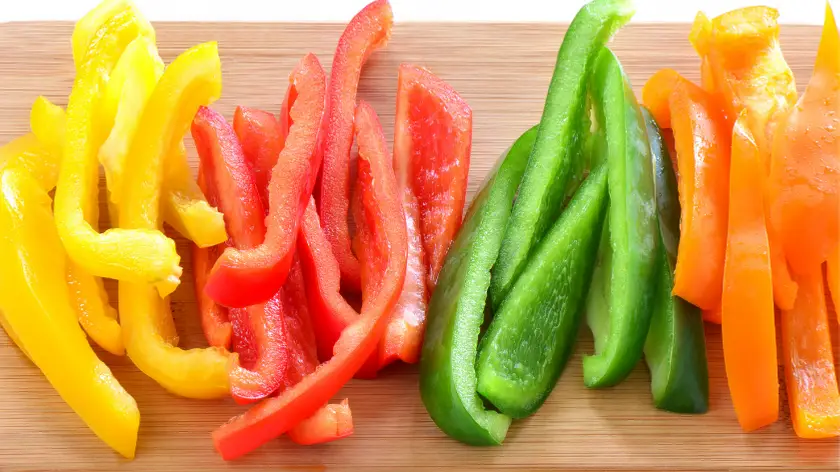
Can Guinea Pigs Eat All Colors of Bell Pepper?
Yes, all four colors are completely safe. The color just affects how often you should offer them due to the varying sugar content:
| Colour | Vitamin C | Sugar Level | How Often |
|---|---|---|---|
| Green | Good | Lowest | ✅ Daily |
| Yellow | Very good | Low-medium | ✅ Daily |
| Orange | Excellent | Medium | 🔄 Daily to a few times a week |
| Red | Highest | Highest (but still moderate) | 🔄 A few times a week |
In practice, many guinea pig owners feed red or orange pepper daily without issues, the sugar difference between colors is relatively small. If your guinea pig has weight issues or a sensitive digestive system, favor green and yellow more often. Otherwise, rotating through all four colors throughout the week is a lovely way to add variety and keep mealtimes interesting for your piggies.
Most guinea pigs have a favourite colour – often red or orange because of the sweeter taste. Don’t be surprised if your piggy learns to hold out for the good stuff!
Can Guinea Pigs Eat Bell Pepper Seeds?
Yes, bell pepper seeds are safe for guinea pigs to eat. This is one of the most commonly asked questions about bell peppers and the answer often surprises people.
Unlike apple pips or watermelon seeds, bell pepper seeds are soft and small. They are non-toxic, don’t pose a choking risk and pass through a guinea pig’s digestive system without any issue. Many guinea pigs actually love the seeds and go for them enthusiastically.
There’s no need to laboriously pick out every seed before serving. Simply cut the pepper, remove the stem, and serve – seeds, pith and all.
⚠️ Important distinction: Don’t confuse bell pepper seeds with peppercorns, the small round black or white balls used as a spice. Peppercorns are spicy and not suitable for guinea pigs. Bell pepper seeds, which are pale, flat and soft, are completely different.
Can Guinea Pigs Eat the White Pith Inside?
Yes, the white inner pith (the spongy white part that holds the seeds) is completely safe and edible. It has a slightly bitter taste that humans tend to remove, but guinea pigs often enjoy it. It also contains some additional fiber and nutrients, so leaving it in is a good idea. Don’t bother removing it.
Can Guinea Pigs Eat Bell Pepper Stems and Leaves?
Stems: The stem is not toxic but is very tough and fibrous. Most guinea pigs aren’t interested in it and will leave it. You can remove it before serving to keep things tidy, but it’s not a safety concern if a small amount is nibbled.
Leaves: Bell pepper leaves are safe in very small amounts. However, the plant belongs to the nightshade family and while the fruit itself is completely safe, the leaves contain trace amounts of compounds that could cause mild digestive upset in large quantities. Since your guinea pig is unlikely to encounter the leaves unless you’re growing peppers at home, this is mostly theoretical, but it’s safest to remove leaves before serving.
Can Guinea Pigs Eat Hot Peppers or Chilli Peppers?
Absolutely not. Chili peppers, jalapeños, cayenne and any other spicy variety contain capsaicin, the compound responsible for the heat. Capsaicin causes intense pain and burning in a guinea pig’s mouth and digestive system. Their sensitive stomachs are not equipped to handle it at all.
Sweet baby peppers and sweet pointed peppers (the long thin ones) are fine, as long as they’re genuinely sweet and not a mild chili variety. When in doubt, taste a small piece yourself before offering it. If there’s any heat at all, don’t feed it.
How Much Bell Pepper Can Guinea Pigs Eat?
A good daily serving is:
- One strip approximately 1 inch wide – or about a 1/6th slice of a whole pepper per guinea pig
- This can be cut into strips, rings or chunks – whatever your guinea pig prefers
This is enough to provide a significant daily dose of vitamin C without overloading on sugar or taking up too much of the 1 cup daily vegetable allowance that should be spread across different vegetables.
If feeding multiple guinea pigs, prepare a strip per piggy. Guinea pigs can be territorial about food, making sure each pig has their own piece prevents squabbles.
Do Guinea Pigs Like Bell Peppers?
Most guinea pigs go absolutely crazy for bell peppers, particularly the sweeter red and orange varieties. It’s one of the most universally loved vegetables in the guinea pig world. The combination of sweet flavor, satisfying crunch and juicy texture ticks all the right boxes.
That said, every guinea pig is an individual. Some take a few tries to warm up to a new food and a small number just don’t care for peppers regardless of color. If your guinea pig ignores bell pepper at first:
- Try a different color – green is more bitter, red is sweeter
- Offer it alongside a favorite food so they investigate
- Try warming it very slightly to room temperature if it’s cold from the fridge
- Give it a few attempts before concluding they don’t like it – sometimes it takes time to accept new foods
How to Prepare Bell Peppers for Your Guinea Pig
Quick and easy:
- Wash thoroughly under cold running water – always, even for organic peppers
- Remove the stem – cut or pull it off cleanly
- Cut into strips or rings – any size is fine, but strips are easiest for guinea pigs to hold and nibble
- Leave the seeds and pith – no need to remove them
- Serve at room temperature – don’t serve cold straight from the fridge; take it out 20 minutes before, or run briefly under lukewarm water
- Remove uneaten pieces after a couple of hours – fresh pepper wilts and goes off in a warm cage
That’s all there is to it. Bell pepper is genuinely one of the most convenient daily vegetables for guinea pig owners, minimal prep, no waste concerns and almost always a hit.
Can Baby Guinea Pigs Eat Bell Peppers?
Yes, bell pepper is actually one of the best first vegetables for young guinea pigs. The high vitamin C content is particularly valuable for growing animals and the mild flavor is well tolerated. Offer small pieces from around 3-4 weeks old as part of a gradual introduction to fresh vegetables.
Signs Your Guinea Pig Has Had Too Much Bell Pepper
Bell pepper is very well tolerated and unlikely to cause problems at normal serving sizes. However, if significantly overfed:
- Soft or loose droppings – from the higher water and sugar content
- Reduced hay eating – if piggies fill up on vegetables, they may eat less hay (always the priority)
- Mild bloating – uncommon with bell pepper but possible if very large quantities are eaten
At a strip per day, you’re very unlikely to see any of these. They’re more relevant if a guinea pig has helped themselves to a whole pepper unsupervised.
Quick Answer Summary
| Question | Answer |
|---|---|
| Can guinea pigs eat bell peppers? | ✅ Yes – one of the best daily vegetables |
| Can they eat green peppers? | ✅ Yes – daily, lowest sugar |
| Can they eat red peppers? | ✅ Yes – highest vitamin C, a few times a week |
| Can they eat yellow peppers? | ✅ Yes – daily |
| Can they eat orange peppers? | ✅ Yes – daily to a few times a week |
| Can they eat the seeds? | ✅ Yes – soft, non-toxic, safe |
| Can they eat the white pith? | ✅ Yes – safe and nutritious |
| Can they eat the stem? | ⚠️ Remove it – tough and unpalatable |
| Can they eat hot/chilli peppers? | ❌ Never – capsaicin causes pain |
| How much? | 1 strip ( 1/6 of a pepper ) per guinea pig |
| How often? | Green/yellow daily; red/orange a few times a week |
Other Vegetables to Pair With Bell Pepper
Bell pepper works brilliantly as the vitamin C anchor of a daily vegetable serving. Round it out with:
- Romaine or cos lettuce – a great daily leafy base
- Cucumber – hydrating and mild, universally popular
- Fresh coriander – additional vitamin C and a flavour most piggies love
- Carrot tops – nutritious and often preferred over the root
- Dandelion leaves – outstanding nutrition if you have a pesticide-free garden source
Rotating through a variety of safe vegetables throughout the week (with bell pepper as the daily constant) is the gold standard for guinea pig nutrition.
For the complete guide to safe vegetables, visit our Best Vegetables for Guinea Pigs – A to Z Safe Food List.
Final Thoughts
If there’s one vegetable that belongs in every guinea pig’s daily bowl, it’s bell pepper. Nutritious, safe, easy to prepare, low maintenance and loved by the vast majority of piggies – it’s the closest thing to a perfect daily vegetable that exists in the guinea pig world.
The fun ripening fact is always a hit with new guinea pig owners too: that punnet of red, yellow, orange and green peppers at the supermarket is actually the same vegetable at four different stages of its life. Nature is pretty clever and so are the guinea pigs who know which one to eat first. 🐹
Related posts:
- Best Vegetables for Guinea Pigs – A to Z Safe Food List
- What Can Guinea Pigs NOT Eat? Complete Toxic Foods List
- Can Guinea Pigs Eat Watermelon?
- Can Guinea Pigs Eat Strawberries?
Always introduce new foods gradually and consult your vet if you have specific concerns about your guinea pig’s diet or health.
)