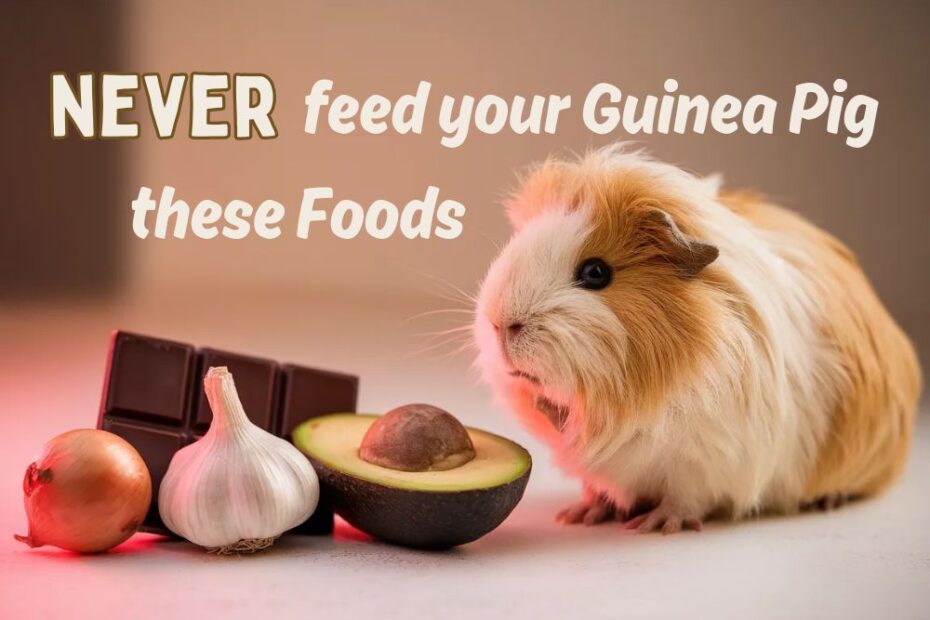
Knowing what your guinea pig cannot eat is just as important as knowing what they can. Some foods are simply unhealthy: too sugary, too fatty or hard to digest. Others are genuinely toxic and can cause serious harm or even death within hours. This complete guide covers both, so you always know exactly what to keep away from your piggy.
🚨 If your guinea pig has eaten something from this list and is showing symptoms like laboured breathing, seizures, extreme lethargy or loss of balance – contact your vet immediately. Don’t wait to see if they improve.
Why Guinea Pigs Are Sensitive to So Many Foods
Guinea pigs are strict herbivores with sensitive digestive systems that have evolved to process a very specific diet: mostly hay, some leafy greens and a small amount of vegetables and occasional fruit. Their digestive systems cannot handle meat, dairy, processed foods or many of the plants that other animals tolerate just fine.
They also cannot vomit. This means that if a guinea pig eats something toxic, they cannot expel it the way a cat or dog might. Whatever goes in, stays in – making prevention absolutely critical.
The Danger Levels Explained
Throughout this guide, foods are marked with one of three levels:
- 🔴 TOXIC – Can cause serious illness or death. Never feed under any circumstances.
- 🟠 HARMFUL – Will cause digestive upset, pain or health problems. Avoid entirely.
- 🟡 CAUTION – Not immediately dangerous in tiny amounts, but should still be avoided or strictly limited.
🔴 Truly Toxic Foods – Never Feed These
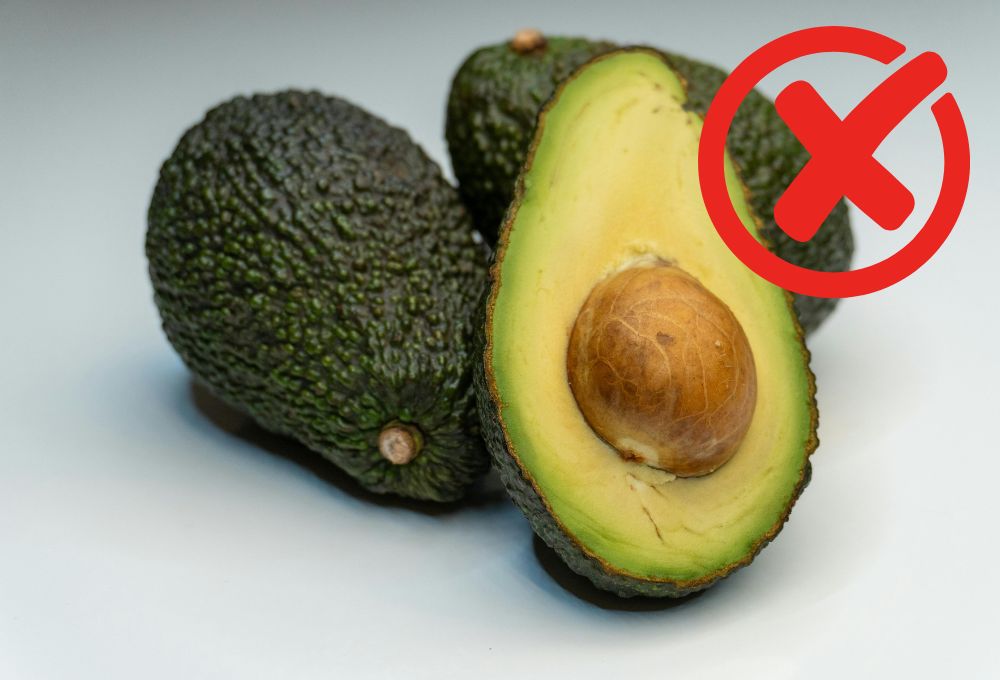
Avocado
Avocado contains a compound called persin, found in every part of the fruit – the flesh, skin, stone and even the leaves. Persin is toxic to guinea pigs and can cause heart muscle damage within 24 to 48 hours, potentially leading to congestive heart failure. There is no safe amount of avocado for guinea pigs. Keep it away completely.
Symptoms of avocado toxicity: diarrhoea, lethargy, abdominal pain, difficulty breathing.
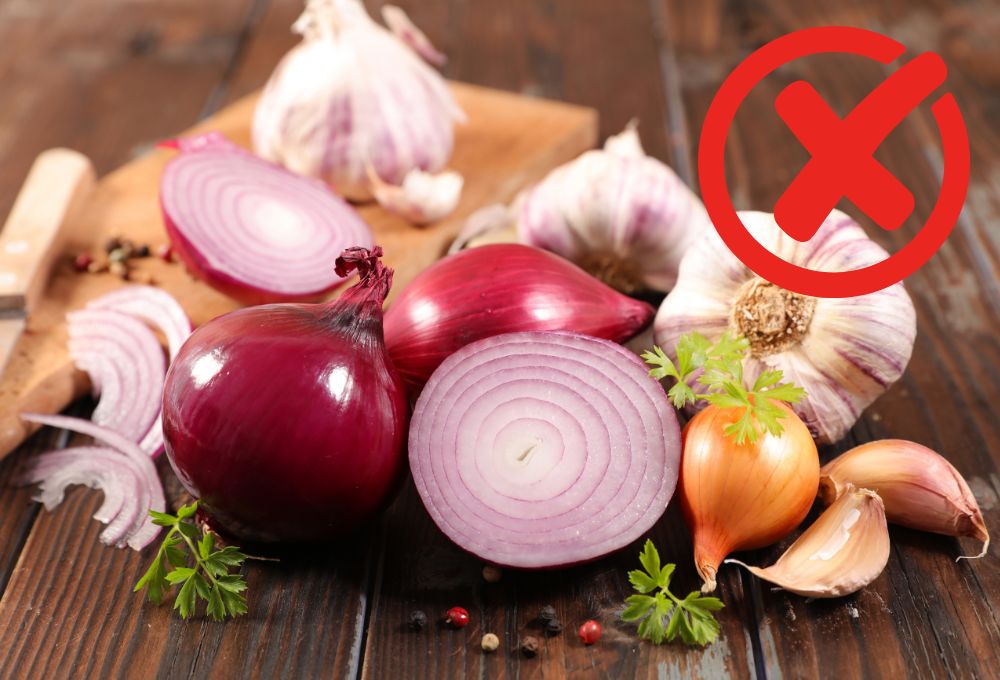
Onions, Garlic, Leeks, Chives & All Allium Plants
The entire Allium family – onions, garlic, leeks, chives, shallots and spring onions – is toxic to guinea pigs. They contain sulphur compounds that damage red blood cells, leading to a condition called haemolytic anaemia. Even small amounts can cause harm. This includes cooked versions, powdered garlic and garlic bread, any form.
Symptoms: weakness, lethargy, laboured breathing, pale gums.
Rhubarb
Rhubarb, especially the leaves, is highly toxic to guinea pigs due to its very high oxalic acid content. Oxalic acid binds to calcium in the body, disrupting kidney function and potentially causing kidney failure. The stalks are also harmful, though less so than the leaves. Avoid all parts entirely.
Symptoms: tremors, weakness, excessive drooling, kidney failure.
Potatoes & Potato Tops
Raw potatoes and all green parts of the potato plant contain solanine, a toxic glycoalkaloid. Solanine poisoning causes severe digestive upset and can be fatal. This includes potato leaves, stems and any green-tinged potato skin. Cooked potato is slightly less dangerous but still has very poor nutritional value for guinea pigs and should be avoided.
Tomato Leaves, Stems & Unripe Tomatoes
The red flesh of a ripe tomato is safe in very small amounts (though acidic and best limited), but the green parts are a different story. Tomato leaves, stems, vines and unripe green tomatoes contain tomatine, a toxic compound that can cause serious digestive and neurological problems. Always remove the leafy top completely before serving any tomato.
Chocolate
Chocolate contains theobromine, a compound that is toxic to most animals including guinea pigs. Even a tiny amount can cause heart arrhythmia, seizures and death. Dark chocolate is the most dangerous due to its higher theobromine content, but all forms of chocolate are off limits.
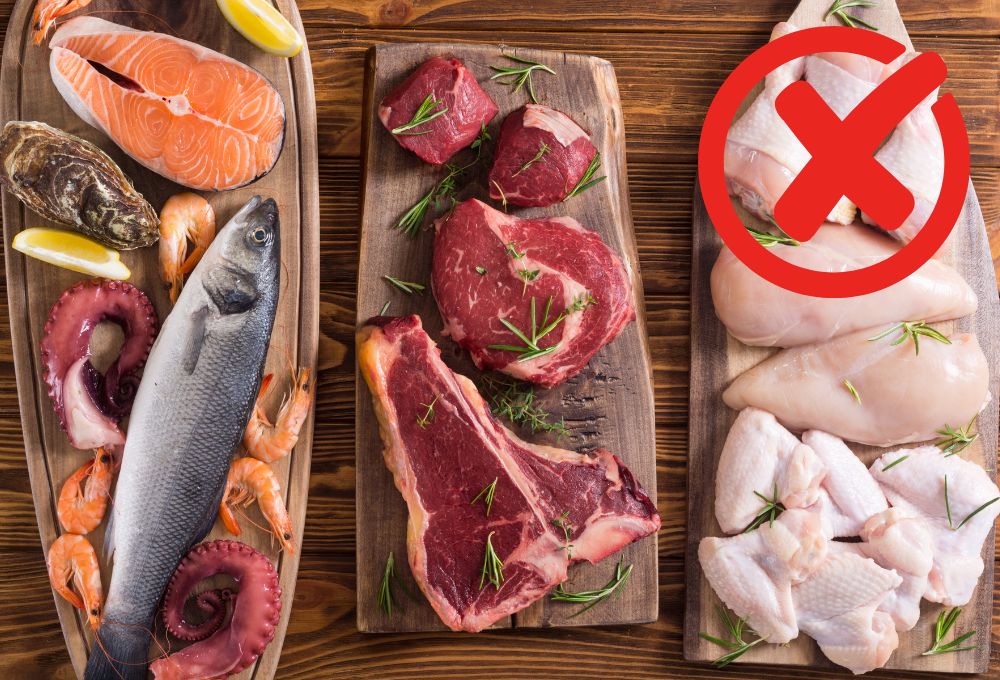
Meat & Fish
Guinea pigs are strict herbivores, their digestive systems are not designed to process animal protein at all. Feeding meat or fish can cause severe digestive distress and illness. This seems obvious, but it’s worth stating clearly: no chicken, no fish, no processed meats of any kind.
Dairy Products
Milk, cheese, yoghurt and any other dairy products should never be given to guinea pigs. They are lactose intolerant and cannot digest dairy. It will cause painful digestive upset and diarrhoea.
🟠 Harmful Foods – Avoid Entirely
Iceberg Lettuce
Iceberg lettuce has very little nutritional value and an extremely high water content that can cause watery diarrhoea and digestive upset. Replace it with darker, more nutritious lettuces like romaine or leafy green lettuce.
Bread, Crackers & Cereals
Processed grain products – bread, crackers, pasta, rice, breakfast cereals – are all wrong for a guinea pig’s digestive system. They are high in starch and carbohydrates that the guinea pig gut cannot process properly, leading to dangerous gas and bloating. Muesli-style guinea pig mixes that contain seeds and dried grains are also best avoided for the same reason.
Nuts & Seeds
Nuts and most seeds are far too high in fat for guinea pigs. Their pancreases are not equipped to handle high fat content, which can lead to obesity, pancreatitis and other serious health issues. This includes peanuts, walnuts, almonds, sunflower seeds and pumpkin seeds.
Mushrooms
Mushrooms offer no nutritional benefit to guinea pigs and wild mushrooms in particular can contain toxic compounds that are fatal. Even shop bought mushrooms are best avoided, the potential risks aren’t worth it when there are so many safe alternatives.
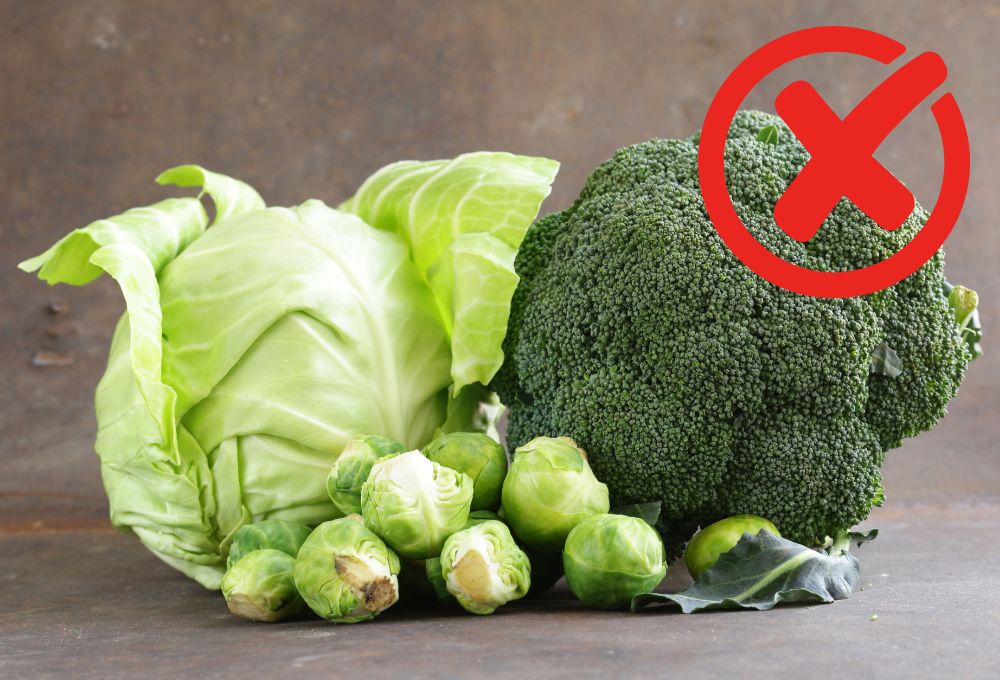
Cabbage, Cauliflower & Brussels Sprouts
These brassica vegetables cause excessive gas and bloating in guinea pigs, which is painful and potentially dangerous. Their digestive systems are not designed to handle the compounds that create gas during digestion of these vegetables. Small occasional amounts of some brassicas (like a bit of broccoli) are generally tolerated, but cabbage, cauliflower and Brussels sprouts are best left out entirely.
Spicy Peppers & Hot Foods
Sweet bell peppers are wonderful for guinea pigs (they’re an excellent source of vitamin C), but hot peppers – chilli, jalapeño, cayenne – cause pain, digestive upset and significant distress. No spicy food of any kind should be given.
Dried Fruit
Dried fruit is essentially concentrated sugar. Even fruits that are safe fresh (like raisins from grapes or dried mango) become problematic when dried because the sugar content per gram increases dramatically. Dried fruit can cause digestive upset, blood sugar spikes and obesity.
Raw Beans & Dried Pulses
Raw or dried beans, lentils and other pulses contain compounds that are toxic when uncooked and can cause severe digestive problems. Cooked beans are less dangerous but still not recommended, the high protein and starch content doesn’t suit a guinea pig’s digestive system.
Peanut Butter
High in fat, sugar and potentially sticky, peanut butter is a choking hazard and causes digestive problems. Some brands also contain xylitol (an artificial sweetener that is toxic to many animals). Avoid completely.
🟡 Foods to Use With Caution or Strictly Limit
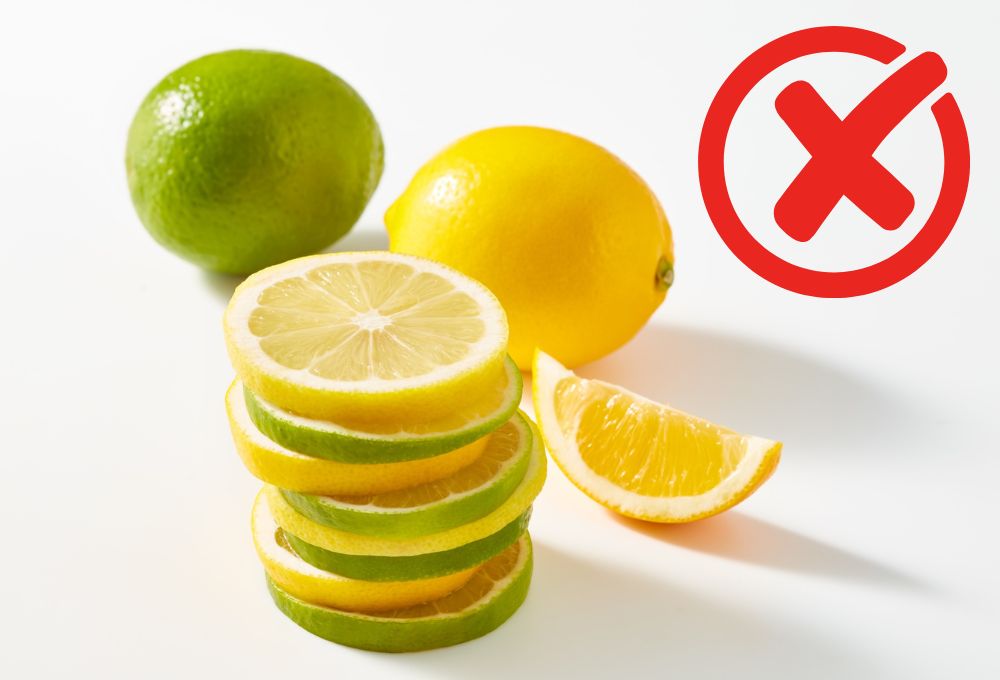
Citrus Fruits (Lemons, Limes, Grapefruit)
These are highly acidic and can cause painful mouth sores and digestive upset. Small amounts of orange a couple of times a week are generally tolerated, but lemons, limes and grapefruit are too acidic for most guinea pigs and are best avoided entirely.
Spinach & Chard
Both are high in oxalic acid and calcium. In large amounts or fed too frequently, they can contribute to the formation of bladder or kidney stones, a painful and common condition in guinea pigs. Small amounts of spinach occasionally are fine, but it shouldn’t be a daily staple.
Grapes & Raisins
Fresh grapes are not acutely toxic to guinea pigs the way they are to dogs, but they are very high in sugar. A small piece occasionally is fine, but raisins (dried grapes) should be avoided due to the concentrated sugar content.
Corn on the Cob (Mature)
Baby corn is fine, but mature corn on the cob, once it has fully dried, is too starchy and hard for guinea pigs to digest well. Dried corn can cause digestive blockages.
Tomatoes (Ripe Flesh)
As mentioned, ripe tomato flesh is not toxic, but it is highly acidic and can cause mouth sores if fed frequently. A small piece occasionally is fine, but it should never be a regular part of their diet. Always remove the leafy green top completely.
Toxic Plants & Garden Dangers
If your guinea pig has outdoor floor time in a garden or yard, plant awareness is just as important as food safety. Many common garden and house plants are toxic to guinea pigs.
Common toxic garden plants:
- Buttercups – Very common and toxic; check your lawn before letting piggies graze
- Daffodils – All parts are toxic, especially the bulb
- Tulips – Contain tulipalin A and B; toxic if eaten
- Foxglove – Contains digitalis which severely affects the heart
- Lily of the Valley – Highly toxic to the heart
- Rhododendrons & Azaleas – Contain grayanotoxins; can cause cardiac issues
- Bluebells – All parts are toxic
- Hyacinths & Crocuses – Toxic, particularly the bulbs
- Ivy – All common ivy varieties are harmful
- Yew – Extremely dangerous; can cause sudden heart failure
- Nightshade – Highly toxic; causes neurological symptoms
Toxic houseplants to keep out of reach:
- Poinsettia
- Lilies (all varieties)
- Jade plant
- Dieffenbachia (Dumb Cane)
- Rubber plant
- Spider plant (mildly toxic)
- Amaryllis
💡 General rule for garden time: If you cannot positively identify a plant as safe, assume it is not. Never let your guinea pig graze unsupervised in an unfamiliar area.
What to Do If Your Guinea Pig Eats Something Toxic
Act quickly. Guinea pigs can deteriorate fast.
- Identify what they ate – and approximately how much
- Check for symptoms – lethargy, loss of balance, laboured breathing, seizures, bloating, pale gums
- Call your vet immediately – don’t wait for symptoms to appear if you know they’ve eaten something toxic
- Do not try to make them vomit – guinea pigs cannot vomit and attempting this causes further harm
- Bring the plant or packaging to the vet if you can, so they can identify the toxin
Even if your guinea pig seems fine after eating something toxic, a vet check is still worth it. Some toxins, particularly avocado and allium compounds, cause damage that isn’t immediately visible.
Quick Reference: Foods to Avoid
| Food | Danger Level | Why |
|---|---|---|
| Avocado | 🔴 TOXIC | Contains persin; causes heart failure |
| Onion / Garlic / Leeks / Chives | 🔴 TOXIC | Damages red blood cells |
| Rhubarb | 🔴 TOXIC | High oxalic acid; kidney failure |
| Chocolate | 🔴 TOXIC | Theobromine; heart arrhythmia |
| Potato (raw / green parts) | 🔴 TOXIC | Contains solanine |
| Tomato leaves & stems | 🔴 TOXIC | Contains tomatine |
| Meat & fish | 🔴 TOXIC | Cannot be digested; herbivore |
| Dairy | 🟠 HARMFUL | Lactose intolerant |
| Iceberg lettuce | 🟠 HARMFUL | Causes diarrhoea |
| Mushrooms | 🟠 HARMFUL | Toxic compounds, especially wild |
| Bread / pasta / cereals | 🟠 HARMFUL | Causes dangerous bloating |
| Nuts & seeds | 🟠 HARMFUL | Too high in fat |
| Cabbage / cauliflower | 🟠 HARMFUL | Severe gas and bloating |
| Dried fruit | 🟠 HARMFUL | Concentrated sugar |
| Spicy peppers | 🟠 HARMFUL | Causes pain and digestive upset |
| Citrus (lemon/lime/grapefruit) | 🟡 CAUTION | Too acidic; mouth sores |
| Spinach (in excess) | 🟡 CAUTION | Oxalic acid; bladder stones |
| Grapes (fresh) | 🟡 CAUTION | High sugar; limit strictly |
| Ripe tomato flesh | 🟡 CAUTION | Acidic; limit to occasional only |
What Should Guinea Pigs Actually Eat?
Now that you know what to avoid, here’s the quick version of what a healthy guinea pig diet looks like:
- Unlimited timothy hay – This should make up 80% of their diet. It keeps their teeth worn down and their digestion healthy.
- Fresh leafy greens daily – Romaine lettuce, cos lettuce, rocket, kale (in moderation), fresh herbs like parsley and coriander.
- Bell peppers – An excellent daily source of vitamin C. All colors are safe.
- A small amount of pellets – Plain timothy-based pellets, about 1/8 cup per guinea pig per day.
- Occasional fruit treats – Strawberries, blueberries, watermelon, apple (no seeds). Small portions, a couple of times a week.
- Fresh water always available
Final Thoughts
The list of what guinea pigs cannot eat is long, but the principle behind it is simple: their systems are designed for fresh, fibrous, plant-based foods. Anything processed, fatty, high in sugar, acidic or from the onion family is a risk. When in doubt, leave it out – there are so many wonderful safe foods to choose from that it’s never worth gambling with something uncertain. 🐹
This guide is regularly updated to reflect current veterinary guidance. Always consult your vet if you have specific concerns about your guinea pig’s diet or health.
)