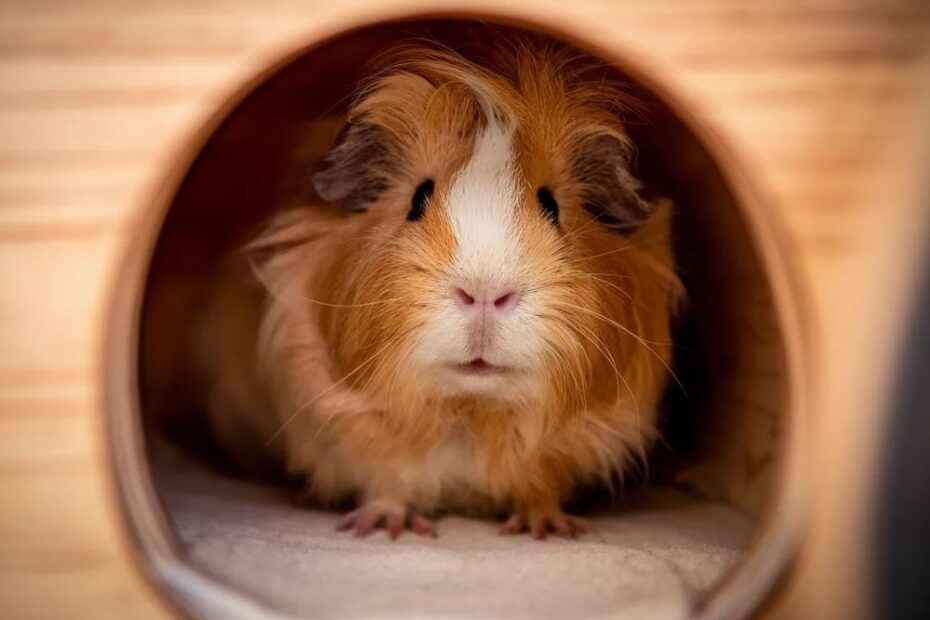
First, the most important thing: your guinea pig doesn’t hate you. If you’ve been reaching into the cage only to watch your piggy bolt to the furthest corner like you’re the most terrifying thing they’ve ever seen, you’re not alone, and it’s not a reflection of how much they like you. It’s biology. And the good news is, with the right approach, it’s almost always completely fixable.
This guide explains exactly why guinea pigs run away, what you might be doing that accidentally makes it worse and a practical step-by-step plan to build the kind of trust where your guinea pig comes toward you instead of away.
Why Does My Guinea Pig Run Away? The Real Reason
Guinea pigs are prey animals. In the wild, a cavy’s entire survival strategy revolves around one thing: not getting eaten. Predators come from above (birds of prey), from the side (foxes, cats, dogs) and from every direction. A wild guinea pig that sits still when something large moves toward it is a dead guinea pig.
So when your hand descends into their cage from above, large, fast moving and unpredictable, your guinea pig’s brain does exactly what millions of years of evolution programmed it to do. It runs.
This is not about you personally. It’s not about how much time you’ve spent with them, how gently you speak to them or how many strawberries you’ve offered. It’s a deeply wired survival instinct that every guinea pig carries and it takes time and patience to work with, not against.
💡 The key insight: You are not teaching your guinea pig that you’re friendly. You’re teaching their nervous system that you’re safe. Those are two different things and the second one takes longer, but it sticks.
The Most Common Reasons Guinea Pigs Run Away
Understanding exactly what’s triggering the flight response helps you fix it faster. Here are the most common causes:
They’re new to your home
A brand new guinea pig is essentially experiencing sensory overload. New smells, new sounds, new light levels, new cage, new humans – everything is unfamiliar and therefore potentially threatening. Running away from you during this period is completely expected and doesn’t mean anything went wrong. Give them at least one to two weeks to simply settle in before expecting much interaction.
They haven’t been socialised enough
Some guinea pigs come from environments where they had very little human contact: pet shops, large breeders or homes where they were kept but not regularly handled. These piggies have no positive associations with human hands and need more time and consistency to build them.
Your approach is triggering their instincts
Even well meaning guinea pig owners unknowingly do things that activate the prey response:
- Approaching from above – reaching straight down into the cage mimics a bird of prey diving
- Moving too quickly – fast movements equal predator in a guinea pig’s brain
- Making sudden loud noises – dropping the cage lid, loud voices, music
- Making eye contact and staring – direct eye contact is a predator behaviour in the animal world
- Picking them up before they’re ready – breaking their trust before it’s fully built
A negative experience has knocked back their trust
If your guinea pig was dropped, grabbed, hurt accidentally or had a fright during handling, they remember. Guinea pigs have surprisingly good memories for negative experiences. A single bad handling incident can set back weeks of progress, which is why gentle, consistent, positive interactions from the very beginning matter so much.
Their personality is naturally more cautious
Just like people, guinea pigs have individual personalities. Some are bold and curious, they’ll be climbing on you within a week. Others are naturally more timid and take months to fully relax. Neither is wrong; they just need different amounts of time and patience.
They simply don’t want to be picked up right now
Sometimes a guinea pig that’s usually fine with handling will run away on a particular day. They might be tired, slightly unwell or just not in the mood. This is completely normal and worth respecting – forcing interaction when a guinea pig has clearly opted out damages trust rather than building it.
Common Mistakes That Make It Worse
These are well-intentioned things that can accidentally slow down the bonding process:
Chasing them around the cage to pick them up. This is the single most counterproductive thing you can do. Every chase reinforces the association between your hand and danger. The more you chase, the more they run – it becomes a self-fulfilling cycle. If you need to pick them up, use a small box or a cuddle cup they can walk into rather than pursuing them with your hands.
Only approaching them when you need to pick them up. If the only time you interact with your guinea pig is when you’re about to pick them up, they learn very quickly that your approach means something uncomfortable is coming. Vary your interactions: sometimes just sit nearby, sometimes offer food without picking them up, sometimes just talk to them. Not every approach should end in being lifted.
Moving too fast and getting frustrated. Bonding with a guinea pig is measured in weeks and months, not days. Rushing the process, trying to handle them before they’re ready, doing too much in one session – consistently sets things back. Slow is fast when it comes to building guinea pig trust.
Being inconsistent. Long gaps between interactions reset the progress. A guinea pig that you haven’t approached in two weeks has partially forgotten the positive associations you built. Regular, brief, positive interactions beat occasional long sessions every time.
Picking them up from above. Even with confident guinea pigs, approaching from directly above activates the predator-from-the-sky response. Always approach from the side when possible, at their level.
How to Fix It. A Step-By-Step Bonding Plan
This plan works whether you have a brand new guinea pig or one you’ve had for years who’s never fully settled. Take it slowly and don’t skip steps.
Step 1: Let them settle – hands off (Days 1-7 for new guinea pigs)
For a new guinea pig, the first week should be almost entirely hands-off. Put the cage somewhere they can see and hear the household activity but aren’t overwhelmed by it. Talk to them in a calm, soft voice as you pass. Let them hear your voice and smell your presence without any pressure to interact.
Feed them at the same times each day, routine is enormously reassuring to guinea pigs. Let them hear the sound of vegetables being prepared. Let them associate your smell with food arriving.
What success looks like: They approach the front of the cage when you appear. They wheek when they hear you. They’re alert and curious rather than frozen or hiding.
Step 2: Hand feeding inside the cage – no picking up yet
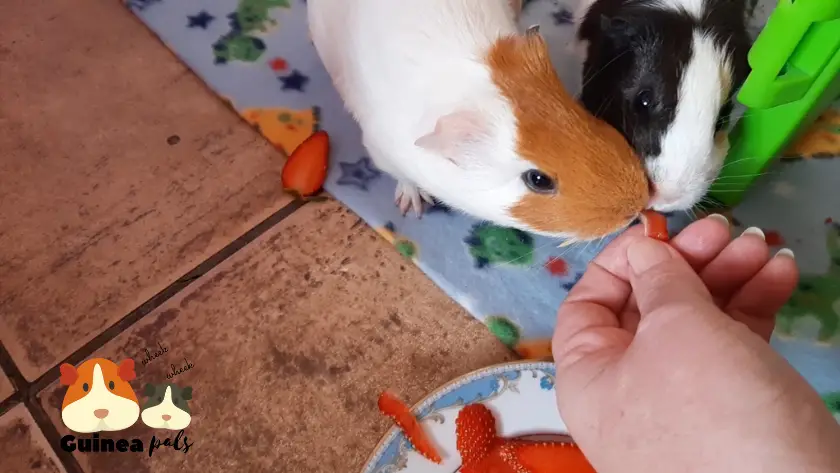
Once your guinea pig is reasonably settled, start offering food by hand through the cage door or by reaching in slowly from the side – never from above.
Start with their absolute favorite food. For most guinea pigs this is a strip of red bell pepper, a piece of strawberry or a sprig of fresh coriander. Hold it steady and wait. Don’t push it toward them, let them come to you.
The first few times, they may approach, snatch the food and run. That’s fine. That’s progress. Every time they take food from your hand, the equation shifts slightly: your hand = good things happen.
Tips for this stage:
- Keep sessions short – 5 minutes is enough
- Stay low and calm – sit on the floor if possible so you’re not looming
- Avoid sudden movements or noises during the session
- Do this every single day – consistency is everything
What success looks like: They come to your hand readily and eat without immediately running away. They may start sniffing your fingers or nibbling your sleeve.
Step 3: Floor time – let them come to you
Before attempting to pick your guinea pig up regularly, introduce floor time in a small, safe, enclosed space – a playpen, a bathroom or a small room with the door closed. Sit on the floor with them and simply be present.
Bring treats. Place a piece of bell pepper on your knee and wait. Don’t reach for them, let them choose to approach. The moment a guinea pig voluntarily climbs onto your lap to get a treat is a significant trust milestone.
This stage can take anywhere from a few sessions to several weeks. Be patient. The goal is for your guinea pig to associate your presence with safety and good things, not to force proximity.
What success looks like: They voluntarily approach you, climb on your lap and eat treats from your hand or your knee without freezing or fleeing.
Step 4: Gentle handling – getting the technique right
Once your guinea pig is comfortable approaching you on the floor, you can start working on comfortable picking up and handling.
How to pick up a guinea pig correctly:
- Approach from the side, not from above
- Place one hand gently under their chest and front legs
- Support their bottom and hind legs with your other hand immediately – a guinea pig that feels their back legs dangling unsupported will panic
- Bring them close to your body so they feel secure against you
- Keep movements slow and smooth throughout
- Speak softly and calmly as you lift them
During handling:
- Keep sessions short initially – 5 to 10 minutes
- Sit on the floor so there’s no risk of a serious fall if they wriggle
- Let them move around on your lap rather than restraining them
- Offer treats during handling to reinforce the positive association
- Watch for signs they want to be put down (teeth chattering, wriggling persistently, trying to jump off)
What success looks like: They stop struggling after being picked up and settle calmly in your arms or on your lap. Some guinea pigs will close their eyes and purr during handling once they trust you completely.
Step 5: Consistency and the long game
The final step isn’t really a step, it’s an ongoing commitment. Daily interaction, even just a few minutes of hand-feeding or floor time, maintains and deepens the bond. Guinea pigs don’t have a fixed trust level that, once achieved, stays forever – they need regular positive reinforcement to maintain their confidence.
The reward, when it comes, is genuinely wonderful. A fully bonded guinea pig will wheek when they hear your voice, run toward the cage door when you approach, climb onto your lap without being placed there, and settle contentedly in your arms. Some become remarkably dog-like, following their person around during floor time, responding to their name, learning the routine of their household down to the sound of specific footsteps.
How Long Does It Take?
Honestly, it varies enormously:
| Guinea pig situation | Typical bonding timeline |
|---|---|
| Young, well-socialised piggy from a good home | 2-4 weeks |
| Adult with limited previous human contact | 1-3 months |
| Rescue guinea pig with unknown history | 2-6 months |
| Naturally timid personality | May always need more patience; full trust possible but takes longer |
| Guinea pig after a negative experience | Variable – restart from Step 1 |
The most important thing is to measure progress rather than timelines. Is your guinea pig coming closer than they were last week? Taking food from your hand when they wouldn’t before? That’s success, regardless of how long it’s taking.
Signs Your Guinea Pig Is Starting to Trust You
Watch for these encouraging signals that things are moving in the right direction:
- ✅ Approaching the cage front when they see or hear you
- ✅ Wheeking when you appear, especially before you’ve even shown any food
- ✅ Taking food from your hand without immediately fleeing
- ✅ Allowing you to stroke them without running away
- ✅ Sitting still (rather than frozen and terrified) when you’re nearby
- ✅ Exploring your lap or hands during floor time
- ✅ Falling asleep near you or on you
- ✅ Grooming themselves in your presence, a very relaxed guinea pig behavior
- ✅ Popcorning during floor time with you, they’re genuinely happy
Signs to Be Patient With
These don’t mean you’re failing – they’re just part of the process:
- Running when you first open the cage (very common even in bonded guinea pigs)
- Hiding when strangers visit
- Being more skittish on some days than others
- Accepting food but not yet tolerating strokes
- Freezing briefly when first picked up
A Note on Guinea Pigs That Never Fully Warm Up
Most guinea pigs, with consistent patience and the right approach, will reach a point of comfortable trust. But it’s worth acknowledging that a small number of guinea pigs, particularly those that were poorly socialized very early in life or that have experienced significant trauma – may never fully enjoy being picked up and held, no matter how much love and patience they receive.
This isn’t a failure. A guinea pig can live a wonderfully happy, enriched, loved life even if they prefer to interact on their own terms, running to the cage front for vegetables, accepting gentle strokes when they choose to approach, enjoying floor time without necessarily seeking cuddles.
Respect their personality. The goal is a happy guinea pig, not a perfectly cuddly one.
Quick Tips Summary
- 🐹 Don’t chase – use a box or cuddle cup instead
- 🐹 Approach from the side, never from above
- 🐹 Hand-feed daily – food is the fastest trust-builder
- 🐹 Keep sessions short and always end on a positive note
- 🐹 Be consistent – daily brief interactions beat weekly long ones
- 🐹 Sit on the floor – get down to their level
- 🐹 Let them come to you – don’t force proximity
- 🐹 Respect “no” – if they’re chattering teeth or persistently fleeing, end the session
- 🐹 Be patient – weeks to months is normal, not a sign of failure
Final Thoughts
A guinea pig running away from you is not a sign that you’ve failed or that your piggy is broken. It’s a small prey animal doing exactly what small prey animals do and with time, consistency and the right approach, almost every guinea pig can learn that their human is the best thing in their world.
The day your guinea pig hears your footsteps and comes running to the front of the cage, wheeking at full volume before you’ve even opened the fridge, that’s the payoff. And it’s absolutely worth every patient step it took to get there. 🐹
Related posts:
- Guinea Pig Sounds and What They Mean – Complete Guide
- How to Hold a Guinea Pig Correctly – Step by Step
- Should I Get One or Two Guinea Pigs?
- Best Vegetables for Guinea Pigs – A to Z Safe Food List
If your guinea pig’s avoidance behavior is accompanied by other symptoms such as lethargy, loss of appetite, or unusual posture, it may indicate a health issue rather than a trust issue. Always consult your vet if you’re concerned.
)