
Last updated: September 2025
Getting your first guinea pig is an exciting adventure, but it can also feel overwhelming.
After years of raising guinea pigs and helping countless new owners, I’ve created this comprehensive guide to give you everything you need to know about proper guinea pig care.
Guinea pigs aren’t just “starter pets” – they’re intelligent, social animals that can live 4-8 years and require specific care to thrive.
This guide will walk you through every aspect of guinea pig ownership, from setting up their habitat to understanding their unique behaviors.
Table of Contents
- Before You Get Your Guinea Pig
- Setting Up the Perfect Habitat
- Nutrition: What Guinea Pigs Eat
- Daily Care Routine
- Health and Wellness
- Understanding Guinea Pig Behavior
- Common Mistakes to Avoid
- Monthly Care Checklist
Before You Get Your Guinea Pig
Why Guinea Pigs Make Great Pets
Guinea pigs are wonderful companions for several reasons:
- They’re naturally social and bond strongly with their owners
- They rarely bite (unlike hamsters or gerbils)
- They have distinct personalities and can learn routines
- They’re active during the day when you’re home
- They live longer than most small pets (4-8 years)
Guinea Pigs Need Friends
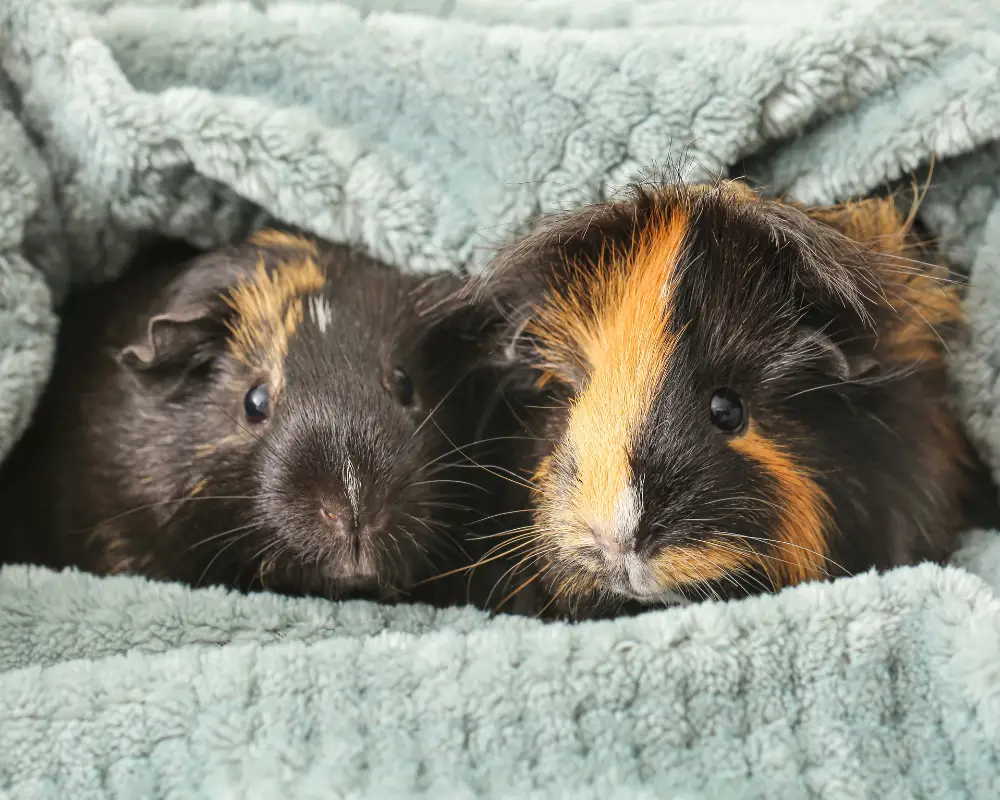
This is crucial: Guinea pigs are herd animals and should never be kept alone. A single guinea pig will become lonely, stressed and may develop behavioral problems or health issues.
Always plan to adopt at least two guinea pigs. Same-sex pairs work well:
- Two females (sows): Usually get along easily
- Two males (boars): Can work but may need more space
- Mixed pairs: Only if one is spayed/neutered to prevent breeding
Initial Costs to Consider
Before bringing home your guinea pigs, budget for:
- Cage: $80-200 for a proper-sized enclosure
- Initial supplies: $100-150 (bedding, food, water bottles, hideouts)
- Veterinary exam: $50-100 per pig
- Monthly ongoing costs: $30-50 for food, bedding, and hay
Setting Up the Perfect Habitat
Cage Size Requirements
Minimum cage sizes:
- Two guinea pigs: 10.5 square feet (76cm x 91cm)
- Three guinea pigs: 13 square feet
- Four guinea pigs: 16 square feet
Remember: bigger is always better. Guinea pigs need space to run, play and establish territories.
Best Cage Options
C&C Cages (Cubes and Coroplast):
- Most popular among experienced owners
- Expandable and customizable
- Good ventilation
- Easy to clean
Large rabbit cages:
- Convenient if you can’t build C&C
- Ensure proper ventilation
- Avoid wire bottom cages
Essential Habitat Components
Bedding:
- Paper-based bedding (CareFresh, Yesterday’s News): Absorbent, dust-free
- Aspen shavings: Natural, good odor control
- Fleece liners: Reusable, eco-friendly (requires daily spot cleaning)
Avoid: Cedar or pine shavings (can cause respiratory issues)
Water System:
- Large water bottles (16-32 oz for two pigs)
- Check daily and clean weekly
- Some owners prefer heavy ceramic bowls
Food Bowls:
- Heavy ceramic bowls prevent tipping
- One pellet bowl, one vegetable bowl per pair
Hideouts and Enrichment:
- At least one hideout per pig
- Tunnels and ramps
- Chew toys (untreated wood, hay-based toys)
Proper Ventilation and Temperature
Guinea pigs are sensitive to temperature extremes:
- Ideal temperature: 65-75°F (18-24°C)
- Avoid: Direct sunlight, drafts, heating vents
- Signs of overheating: Lying flat, rapid breathing, lethargy
- Signs of being cold: Huddling, less active, hunched posture
Nutrition: What Guinea Pigs Eat
The Three Pillars of Guinea Pig Nutrition
1. High-Quality Pellets
- 1/4 cup per pig per day
- Look for Timothy hay-based pellets
- Vitamin C fortified (guinea pigs can’t make their own)
- Avoid muesli-style foods with seeds and colorful bits
2. Unlimited Timothy Hay
- Should make up 75% of their diet
- Keeps teeth worn down and digestive system healthy
- Always available, refill daily
- Store in a dry, ventilated area
3. Fresh Vegetables Daily
- 1 cup of vegetables per pig per day
- Must include Vitamin C-rich foods daily
Safe Vegetables for Daily Feeding
High in Vitamin C (feed daily):
- Bell peppers (all colors, but red/yellow have most Vitamin C)
- Leafy greens: romaine lettuce, kale, cilantro, parsley
- Broccoli (small amounts)
Other safe vegetables (rotate variety):
- Cucumber
- Carrots (small amounts – high in sugar)
- Zucchini
- Celery
- Tomatoes (no stems or leaves)
Occasional treats:
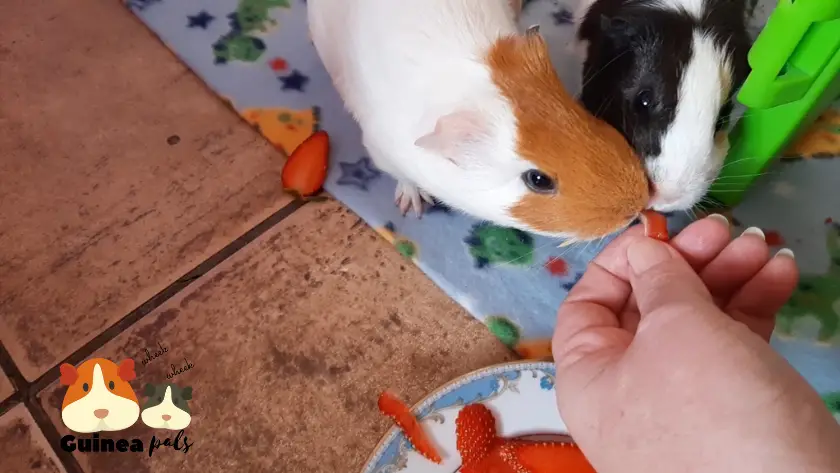
- Fruits: apple slices, strawberries, blueberries (small amounts)
- Fresh herbs: basil, mint, oregano
Foods to Never Feed Guinea Pigs
Toxic foods:
- Chocolate, caffeine, alcohol
- Onions, garlic, chives
- Avocado
- Raw potatoes
- Rhubarb
- Iceberg lettuce (no nutritional value, can cause diarrhea)
Feeding Schedule
- Morning: Pellets and fresh vegetables
- Evening: Fresh hay, check water
- Throughout day: Hay should always be available
Daily Care Routine
Morning Routine (10-15 minutes)
- Health check: Look for normal activity, eating, pooping
- Fresh water: Check and refill if needed
- Pellets: Measure and serve daily portion
- Vegetables: Prepare and serve fresh veggies
- Quick clean: Remove any uneaten fresh food from previous day
Evening Routine (5-10 minutes)
- Fresh hay: Fill hay rack or scatter feeding areas
- Spot clean: Remove soiled bedding and droppings from high-traffic areas
- Water check: Ensure bottles are working and full
- Social time: Handle, pet or let them have floor time
Weekly Deep Clean
- Complete cage cleaning and fresh bedding
- Wash and refill water bottles
- Clean food bowls
- Wash fleece liners if using
- Weigh each guinea pig to monitor health
Health and Wellness
Signs of a Healthy Guinea Pig
Normal behaviors:
- Eating hay throughout the day
- Active periods (especially morning and evening)
- Normal urination and regular droppings
- Curious about surroundings
- Vocal (wheeking for food, purring when content)
Physical signs:
- Clear, bright eyes
- Clean nose (no discharge)
- Smooth, clean coat
- Good weight (you should be able to feel ribs but not see them)
Warning Signs to Watch For
Immediate vet attention needed:
- Not eating for 12+ hours
- No droppings for 12+ hours
- Difficulty breathing
- Discharge from eyes or nose
- Lethargy or hiding constantly
- Tilted head
- Blood in urine
Schedule vet appointment soon:
- Weight loss
- Changes in eating habits
- Overgrown teeth
- Lumps or bumps
- Hair loss
- Changes in behavior
Common Guinea Pig Health Issues
Vitamin C Deficiency (Scurvy):
- Prevention: Daily vegetables high in Vitamin C
- Symptoms: Dental problems, joint swelling, poor coat
Upper Respiratory Infections:
- Often caused by drafts, poor ventilation, or stress
- Symptoms: Sneezing, discharge, lethargy
- Requires antibiotic treatment from vet
Urinary Problems:
- Can be caused by too much calcium
- Symptoms: Blood in urine, straining, frequent urination
- Requires immediate veterinary care
Dental Problems:
- Guinea pig teeth grow continuously
- Prevented by unlimited timothy hay
- Symptoms: Difficulty eating, drooling, weight loss
Finding a Guinea Pig Veterinarian
Not all vets are experienced with guinea pigs. Look for:
- Exotic animal specialists
- Vets with small mammal experience
- Good reviews from other guinea pig owners
- Establish care before you need emergency treatment
Understanding Guinea Pig Behavior
Normal Guinea Pig Sounds
Wheeking: High-pitched squealing, usually means excitement (especially for food)
Purring: Low rumbling sound when content, often during petting
Chattering: Rapid clicking sound, can indicate annoyance or territorial behavior
Popcorning: Jumping and twisting in the air – pure joy!
Rumblestrutting: Deep rumbling with swaying walk, dominance behavior
Social Hierarchy
Guinea pigs establish a pecking order:
- Dominant pig may eat first, claim best spots
- Some mild chasing and mounting is normal
- Separate if there’s actual fighting with injuries
- Never separate bonded pairs unless absolutely necessary
Bonding with Your Guinea Pigs
Building trust:
- Start with quiet, calm interactions
- Let them come to you rather than grabbing them
- Offer treats from your hand
- Speak softly to them regularly
Proper handling:
- Support their bottom and chest
- Never grab them from above (predator behavior)
- Keep sessions short initially
- Always supervise children during handling
Floor Time and Exercise
Guinea pigs need exercise outside their cage:
- Minimum: 1 hour daily floor time
- Safe space: Pig-proofed area with no cords, small objects or escape routes
- Supervision: Always watch them during floor time
- Enrichment: Provide tunnels, ramps and toys to explore
Common Mistakes to Avoid
Housing Mistakes
Getting only one guinea pig: They’re social animals and need companions
Cage too small: Cramped conditions lead to stress and fighting
Wrong bedding: Cedar/pine shavings can cause respiratory issues
Poor ventilation: Aquariums and plastic-topped cages don’t provide enough airflow
Feeding Mistakes
Pellets as main food: Hay should be 75% of their diet
Wrong vegetables: Iceberg lettuce, onions, and other harmful foods
Irregular feeding: Guinea pigs need consistent meal times
No Vitamin C: Must be provided daily through vegetables or supplements
Health Care Mistakes
No exotic vet: Regular vets may not understand guinea pig needs
Waiting too long: Guinea pigs hide illness well; act quickly on warning signs
Wrong medications: Never give medications meant for other animals
Ignoring weight changes: Weekly weigh-ins help catch health issues early
Monthly Care Checklist
Every Day
- [ ] Fresh vegetables and pellets
- [ ] Check water bottles
- [ ] Quick health check
- [ ] Spot clean as needed
Every Week
- [ ] Complete cage cleaning
- [ ] Wash water bottles and food bowls
- [ ] Weigh each guinea pig
- [ ] Nail trim if needed
- [ ] Replace hay supply
Every Month
- [ ] Deep clean all accessories
- [ ] Check and replace worn toys
- [ ] Review and adjust diet if needed
- [ ] Schedule vet checkup if due
- [ ] Take progress photos
Every 3-6 Months
- [ ] Veterinary wellness exam
- [ ] Evaluate cage setup and make improvements
- [ ] Review emergency vet contact information
Creating the Best Life for Your Guinea Pigs
Guinea pigs aren’t just pets – they’re family members who deserve love, proper care and attention. With the right setup, nutrition and daily care routine, your guinea pigs can live long, healthy, happy lives.
Remember that guinea pig care is a learning process. Even experienced owners continue learning new things about their pets. Don’t be afraid to ask questions in guinea pig communities, consult with your veterinarian and adjust your care routine as you learn what works best for your specific guinea pigs.
The bond you’ll develop with properly cared-for guinea pigs is incredibly rewarding. They’ll learn your voice, get excited when you come home and each develop their own unique personality. The time and effort you invest in their care will be returned many times over in the joy and companionship they provide.
About the Author: Mariska has been caring for guinea pigs for over 8 years and has helped hundreds of new owners through her blog GuineaPals.com. She currently shares her home with 6 guinea pigs, each with their own personality and quirks. When not caring for her “herd,” she enjoys researching the latest in small animal care and connecting with fellow guinea pig enthusiasts.
