
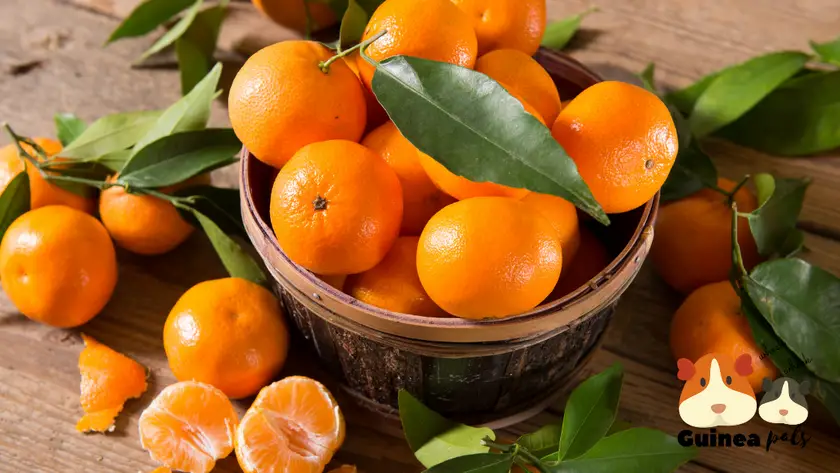
Yes, guinea pigs can eat mandarins and most of them love them. Mandarins are safe, packed with vitamin C and make a wonderfully refreshing treat. The key, as with all fruit, is moderation – the sugar and acidity content means they’re best offered as an occasional treat rather than a daily snack. This guide covers everything you need to know, including the peel debate, every variety of mandarin-type citrus and exactly how much to serve.
What Are Mandarins? (And the Many Names They Go By)
Mandarins go by a surprisingly long list of names depending on where in the world you are – and since guinea pig owners come from everywhere, it’s worth clarifying:
- Mandarin / Mandarin orange – the broad category name used worldwide
- Tangerine – a common variety of mandarin; widely used term in the US and UK
- Naartjie – the South African term for mandarin; the word comes from Tamil and is used across South Africa
- Clementine – a specific hybrid of mandarin and sweet orange; seedless and very sweet
- Satsuma – a Japanese variety of mandarin; very easy to peel, usually seedless
- Tangelo – a mandarin-grapefruit hybrid; safe but quite tart
For guinea pig feeding purposes, all of the above are essentially the same category – sweet citrus fruit with similar nutritional profiles and the same feeding guidelines. If you’re in South Africa reaching for a naartjie to share with your piggy, the same rules apply as anywhere else in the world.
Are Mandarins Good for Guinea Pigs?
Mandarins offer some genuine nutritional benefits when fed in appropriate amounts:
Vitamin C – the standout benefit This is the most important nutrient for guinea pigs. Like humans, guinea pigs cannot synthesise their own vitamin C – they must get every milligram from their diet. A deficiency leads to scurvy, a painful condition that causes swollen joints, bleeding, dental problems and a rough coat. Mandarins are a good source of vitamin C, making them a genuinely useful addition to a varied diet.
That said, bell peppers, strawberries and kale all contain higher concentrations of vitamin C per gram – so mandarins are a supplement to your guinea pig’s vitamin C intake, not the primary source.
Fibre Mandarins contain dietary fibre that supports healthy digestion and regular gut motility – important for guinea pigs whose digestive systems need to keep moving.
Antioxidants Mandarins are rich in flavonoids and beta-carotene – plant compounds that help neutralise free radicals in the body, supporting immune health and reducing cellular damage.
Folate Supports healthy cell production and is particularly important for pregnant guinea pigs.
Potassium Supports healthy heart function and muscle activity.
Hydration Like all citrus fruits, mandarins have a high water content – refreshing and hydrating, especially on warm days.
Nutritional snapshot (per 100g mandarin):
| Nutrient | Amount | Benefit for guinea pigs |
|---|---|---|
| Vitamin C | ~27mg | Scurvy prevention, immune support |
| Fibre | ~1.8g | Digestive health |
| Sugar | ~10.6g | Natural sweetness — limit intake |
| Calcium | ~37mg | Bone health — moderate; watch in excess |
| Potassium | ~166mg | Heart and muscle function |
| Water content | ~85% | Hydration |
| Calories | ~53 kcal | Low calorie treat |
💡 Vitamin C comparison: Mandarins contain around 27mg of vitamin C per 100g. For context, red bell peppers contain approximately 128mg per 100g – nearly five times as much. Mandarins are a useful vitamin C source but bell pepper remains the gold standard for daily vitamin C delivery.
How Much Mandarin Can Guinea Pigs Eat?
Keep portions modest:
- Serving size: 1 to 2 segments (slices) per guinea pig
- Frequency: Once or twice a week at most – not daily
- Remove seeds if the variety has them – seeds are a choking hazard
- Serve at room temperature – not cold straight from the fridge
A segment or two is enough for your guinea pig to enjoy the taste and benefit from the vitamin C without overdoing the sugar or acidity.
The Peel Question – Can Guinea Pigs Eat Mandarin Peel?
This is one of the most searched questions about mandarins and guinea pigs – and also one where advice online is genuinely divided. Here’s an honest breakdown:
The case for: yes, the peel is safe. Mandarin peel does contain vitamin C and flavonoids. The peel is not toxic. Many guinea pig owners have offered small amounts of well-washed mandarin peel without any visible adverse reaction and some guinea pigs enjoy the slightly bitter taste.
The case for caution. Mandarin peel contains natural essential oils – aromatic compounds concentrated in the outer skin that give citrus its distinctive smell. These essential oils can cause digestive irritation in some guinea pigs. The peel is also where pesticide residue tends to concentrate most heavily, since it’s the part of the fruit in most direct contact with sprays.
My recommendation: If you want to offer mandarin peel, do so only with thoroughly washed, organic mandarin peel – and only a very small amount to start. Watch for any signs of digestive upset (loose droppings, lethargy) in the 24 hours following. If your guinea pig shows no reaction and seems to enjoy it, a small piece occasionally alongside the fruit segments is fine.
For store-bought, conventionally grown mandarins, it’s safer to skip the peel entirely unless you’ve washed it very thoroughly – a vinegar soak (1 part white vinegar to 3 parts water for 5–10 minutes, then rinse well) is the most effective method.
Can Guinea Pigs Eat All Varieties of Mandarin Type Citrus?
Here’s how the different varieties compare:
Tangerines ✅ Safe – very similar to standard mandarins in nutritional profile. Slightly larger and with a deeper orange color. Same feeding guidelines apply.
Naartjies (South African mandarins) ✅ Safe – essentially the same fruit as a mandarin, just with a local name. If you’re in South Africa, naartjies are a lovely seasonal treat for your guinea pigs during the winter citrus season when they’re at their sweetest and most affordable.
Clementines ✅ Safe – a seedless hybrid of mandarin and sweet orange. The seedless quality is actually a plus for guinea pig feeding – no need to pick out seeds. Clementines tend to be sweeter than standard mandarins, so they’re slightly higher in sugar; stick to one segment at a time.
Satsumas ✅ Safe – a Japanese variety that’s very easy to peel and typically seedless. Similar nutrition to standard mandarins. A good option for guinea pigs.
Tangelos ✅ with caution A mandarin-grapefruit hybrid – safe in small amounts but noticeably more tart than standard mandarins. The higher acidity makes mouth sores more likely if overfed. Treat as you would a standard mandarin but perhaps be slightly more conservative with portion size.
What about other citrus fruits?
| Citrus fruit | Safe for guinea pigs? | Notes |
|---|---|---|
| Mandarin / tangerine / naartjie | ✅ Yes | Once or twice a week, 1-2 segments |
| Orange | ✅ Yes | Same rules as mandarin; remove seeds |
| Clementine | ✅ Yes | Seedless; slightly sweeter |
| Satsuma | ✅ Yes | Seedless; great option |
| Blood orange | ✅ Yes | Remove seeds; safe in moderation |
| Grapefruit | ❌ Avoid | Too acidic; causes mouth sores |
| Lemon | ❌ Avoid | Far too acidic; causes significant discomfort |
| Lime | ❌ Avoid | Very high acidity; not suitable |
The general rule is: sweet citrus (mandarins, oranges, clementines) in moderation – yes. Sour or sharp citrus (lemons, limes, grapefruit) – no. The acidity is simply too high for a guinea pig’s sensitive digestive system and mouth tissue.
Risks of Feeding Too Many Mandarins
Mandarins are safe when fed in appropriate amounts. Problems arise when they’re overfed:
Mouth sores. The acidity in mandarins can cause painful sores inside a guinea pig’s mouth if fed too frequently. You may notice your guinea pig becoming reluctant to eat, pawing at their mouth or drooling slightly – all signs of mouth irritation. If this happens, stop all citrus for at least two weeks and let the mouth heal.
Digestive upset. Too much sugar or acidic food can cause loose, watery droppings and an upset digestive system. Guinea pig guts are sensitive and finely balanced – disrupting them with excess sugar causes real discomfort.
Weight gain. Natural sugar still contributes to weight gain over time if fed in large amounts regularly. Obesity in guinea pigs leads to reduced mobility, joint problems and a shorter lifespan.
Bladder and kidney stones. Mandarins contain a moderate amount of calcium. Fed frequently alongside other high-calcium foods, this can contribute to the formation of bladder or kidney stones – a common and painful condition in guinea pigs.
Reduced hay intake. If your guinea pig fills up on sweet, juicy fruit, they may eat less hay – the single most important part of their diet. Always ensure hay is available in unlimited quantities and that treats never replace it.
Can Baby Guinea Pigs Eat Mandarins?
It’s best to wait until guinea pigs are at least 8-12 weeks old before introducing fruit. Young guinea pigs have developing digestive systems that are more sensitive to sugar and acidity. When you do introduce mandarin for the first time, start with a tiny piece of one segment and watch carefully for any reaction in the following 24 hours.
How to Serve Mandarins to Your Guinea Pig
Simple and quick:
- Choose a fresh, ripe mandarin – bright orange color, firm but slightly yielding, fragrant
- Wash thoroughly – even if you’re not feeding the peel, rinse the whole fruit before cutting to prevent bacteria or pesticide residue on the skin transferring to the flesh as you peel it
- Peel and separate into segments – remove all of the peel and the white stringy pith (the pith is safe but bitter and most guinea pigs won’t eat it)
- Check for and remove seeds – not all mandarins have seeds but always check; remove any you find
- Offer 1–2 segments per guinea pig – place them in the enclosure or offer by hand
- Serve at room temperature – take the mandarin out of the fridge 20–30 minutes before serving, or briefly run under lukewarm water
- Remove uneaten pieces after an hour – citrus goes off quickly in a warm cage
Signs Your Guinea Pig Has Had Too Much Mandarin
Watch for these after feeding citrus:
- Soft or watery droppings – most common sign of too much sugar or acidity
- Pawing at the mouth or reluctance to eat – possible mouth soreness from the acid
- Drooling – another sign of mouth irritation
- Bloating or a rounded belly – digestive upset
- Lethargy or reduced activity – general sign that something hasn’t agreed with them
If you notice any of these, skip citrus fruits for a couple of weeks. If symptoms persist beyond 24–48 hours, consult your vet.
Do Guinea Pigs Like Mandarins?
Most guinea pigs enjoy the sweet, juicy taste of mandarins – particularly the sweeter varieties like clementines and satsumas. The refreshing juicy texture tends to go down well, especially on warm days.
That said, some guinea pigs are more cautious about citrus – possibly because they can sense the acidity. If your guinea pig sniffs the mandarin and walks away, don’t force it. Try a different fruit or a different variety of mandarin and see if their reaction changes.
Quick Answer Summary
| Question | Answer |
|---|---|
| Can guinea pigs eat mandarins? | ✅ Yes – in moderation |
| Can they eat tangerines? | ✅ Yes – same as mandarins |
| Can they eat naartjies? | ✅ Yes – same as mandarins |
| Can they eat clementines? | ✅ Yes – seedless; slightly sweeter |
| Can they eat satsumas? | ✅ Yes – seedless; great option |
| Can they eat the peel? | ⚠️ Small amount of organic, well-washed peel only |
| Can they eat the seeds? | ❌ No – remove all seeds |
| Can they eat grapefruit? | ❌ No – too acidic |
| Can they eat lemons or limes? | ❌ No – far too acidic |
| How much? | 1-2 segments per guinea pig |
| How often? | Once or twice a week maximum |
Other Fruit Your Guinea Pig Might Enjoy
If your guinea pig loves the sweetness of mandarins, they may also enjoy:
- Strawberries – one of the best fruit treats; very high in vitamin C
- Watermelon – hydrating and refreshing; remove seeds and outer skin
- Blueberries – antioxidant-rich; a small handful a couple of times a week
- Apple – crunchy and popular; always remove seeds, core, and stem
- Pear – gentle and well-tolerated; remove seeds
- Mango – remove skin and stone; a good vitamin C source
All fruit should be offered as treats a few times a week rather than daily, and always introduced one at a time so you can monitor for any digestive reactions.
Final Thoughts
Mandarins – whether you call them tangerines, naartjies, clementines, or satsumas – make a lovely occasional treat for guinea pigs. They’re juicy, fragrant, genuinely nutritious and most piggies are very enthusiastic about them.
The golden rule is moderation: one to two segments, once or twice a week. Keep the sweet citrus varieties and avoid the sour ones. Wash thoroughly, remove seeds and always serve at room temperature.
Related posts:
- Can Guinea Pigs Eat Strawberries?
- Can Guinea Pigs Eat Watermelon?
- Best Vegetables for Guinea Pigs – A to Z Safe Food List
- What Can Guinea Pigs NOT Eat? Complete Toxic Foods List
Always introduce new foods gradually and one at a time. Consult your vet if you have concerns about your guinea pig’s diet or if they show signs of digestive upset after trying a new food.
)